
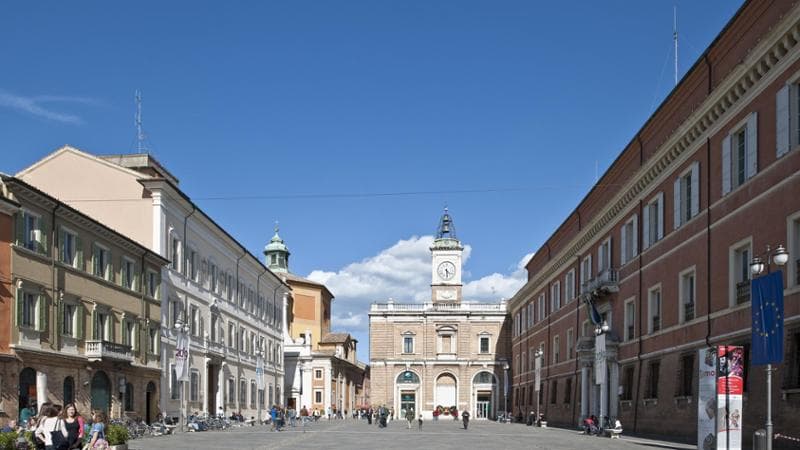
A treasure trove of art, history and culture, Ravenna is a city of extraordinary beauty and historical significance, offering a fascinating insight into some of the defining chapters of Italy’s past.
Once the capital of the Western Roman Empire, the Ostrogothic Kingdom under Theodoric and the Byzantine Empire between the fifth and seventh centuries, this remarkable city tells its story with an elegance and grace all its own.
Visitors can step back in time as they explore its early Christian and Byzantine monuments, collectively inscribed on UNESCO’s World Heritage List in 1996.
From the mosaics depicting Emperor Justinian and Empress Theodora in the Basilica of San Vitale to the Basilica of Sant’Apollinare in Classe, each monument reveals a world of its own. These are stories told through beauty, with mosaics whose delicate, golden hues, extraordinary luminosity and artistry make them truly unique.
The city’s social hubs
Ravenna welcomes visitors and residents alike into its elegant public squares, including Piazza del Popolo, Piazza Kennedy and Piazza San Francesco.
These are the city’s social hubs: places for meeting, culture, celebrations and music, where it is easy to feel at home.
Exploring these squares is all the more enjoyable with a bowl of passatelli in broth and a visit to the magnificent covered market, renovated in an early twentieth-century style with a few inspired contemporary touches.
The city’s eight UNESCO-listed monuments are a breathtaking spectacle, their walls and ceilings illuminated by the dazzling colours of millions of mosaic tiles.
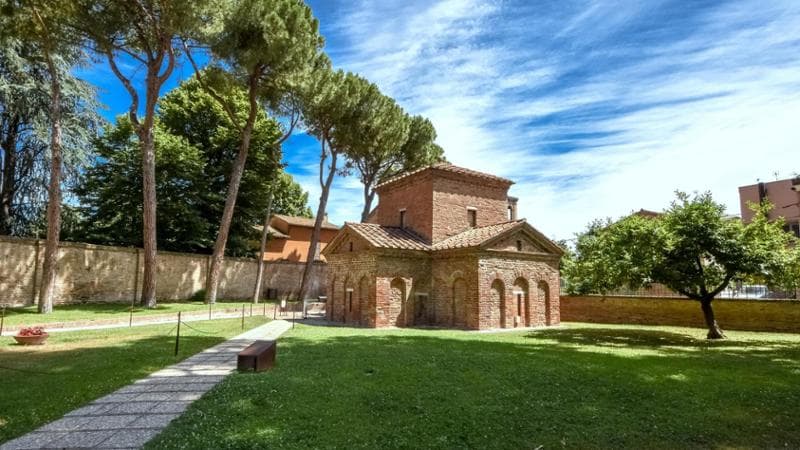
The Mausoleum of Galla Placidia, commissioned by the empress herself in the first half of the fifth century as her intended final resting place, envelops visitors in a warm, ethereal glow. Light filters through its beautiful alabaster windows, illuminating a ceiling adorned with a sky full of golden stars.
The Neonian Baptistery, also known as the Orthodox Baptistery, was commissioned by Bishop Neon in the mid-fifth century. Its mosaics celebrate the sacrament of baptism, with depictions of the twelve apostles.
The Arian Baptistery, built towards the end of the fifth century during the reign of Theodoric, is particularly striking for its mosaic-covered dome. It is the only completely intact iconographic testimony to the Arian faith practised by the Goths, centred on the figure of Christ as both divine and earthly.
The treasures of Sant’Apollinare and Theodoric
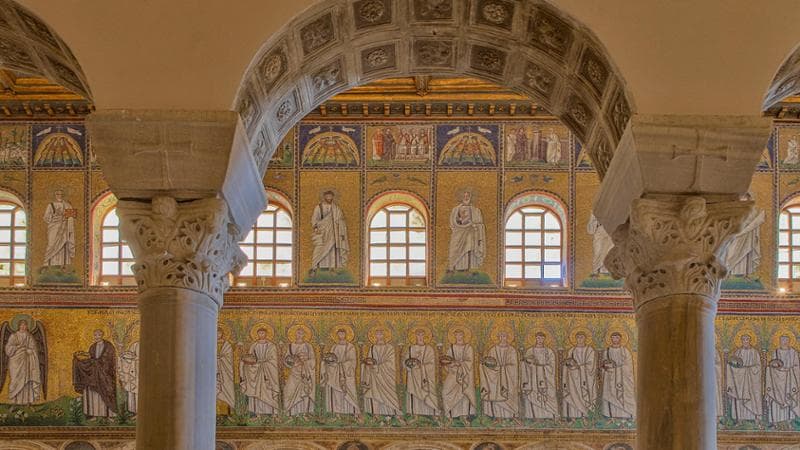
Another unforgettable sight is the Basilica of Sant’Apollinare Nuovo, so named to distinguish it from the Basilica of Sant’Apollinare in Classe. Its mosaics depict the ancient port of Classe, as well as processions of saints, both men and women, bearing witness to their faith in Christ.
The Archiepiscopal Chapel of Sant’Andrea is the only early Christian private chapel of its kind to have survived intact. Its barrel-vaulted ceiling is adorned with around a hundred colourful birds and delicate white lilies, creating a remarkable visual spectacle.
The Mausoleum of Theodoric was commissioned by the Gothic king during his lifetime, on a site just outside the city walls, in an area that was once part of the lagoon.
It is a masterpiece of engineering and craftsmanship, built from precisely cut blocks of Istrian limestone fitted together without mortar and secured with metal clamps. Inside stands an ancient porphyry sarcophagus, believed to have held the remains of King Theodoric.
Three basilicas and a museum
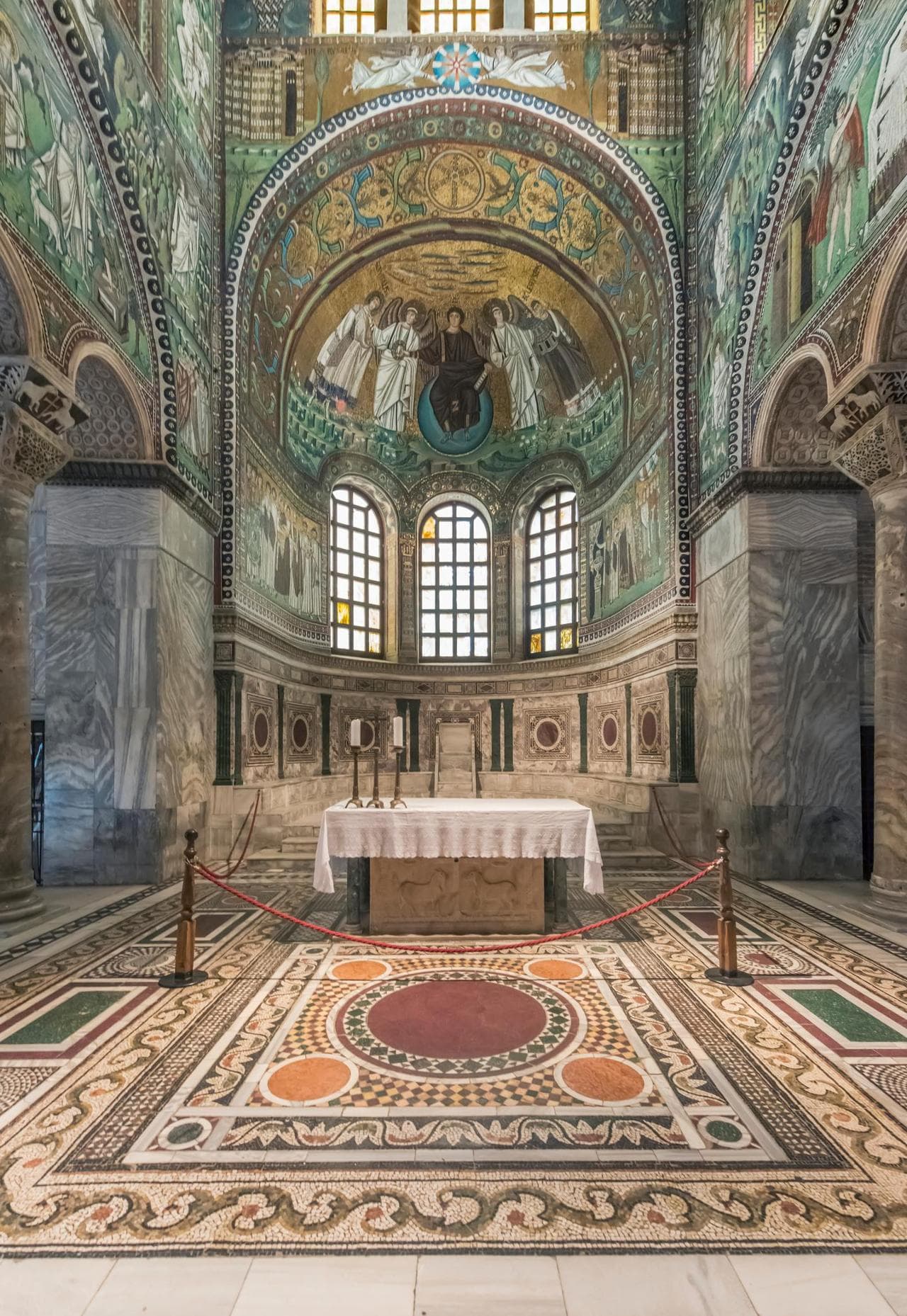
The magnificent Basilica of San Vitale is another essential stop. Its apse is decorated with extraordinary mosaics, including a memorable depiction of Christ seated upon the globe, flanked by the archangels Gabriel and Michael, as he presents Saint Vitalis with the crown of glory.
Finally, a few kilometres from the historic centre, the Basilica of Sant’Apollinare in Classe stands on the site traditionally associated with the burial of Apollinaris, the city’s first bishop.
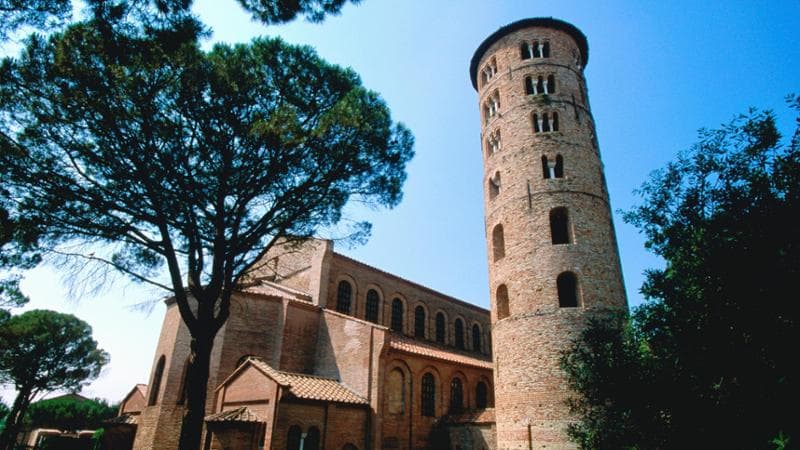
Considered the finest example of a Byzantine basilica in the Ravenna area, it houses an extraordinary mosaic in its apse: a harmonious woodland scene featuring the sacred flock, birds and trees reaching towards a golden sky, with a jewelled cross at its centre bearing the face of Christ.
Even on a brief weekend visit, two further attractions are not to be missed: MAR (the Ravenna Art Museum), with its important collection of contemporary mosaics, and the Basilica of San Francesco, which Dante is believed to have frequented in the fourteenth century.
The church is particularly worth visiting for its unusual crypt, built in the tenth century to house the relics of Bishop Neon. Today, these can be seen through a small window beneath the main altar.
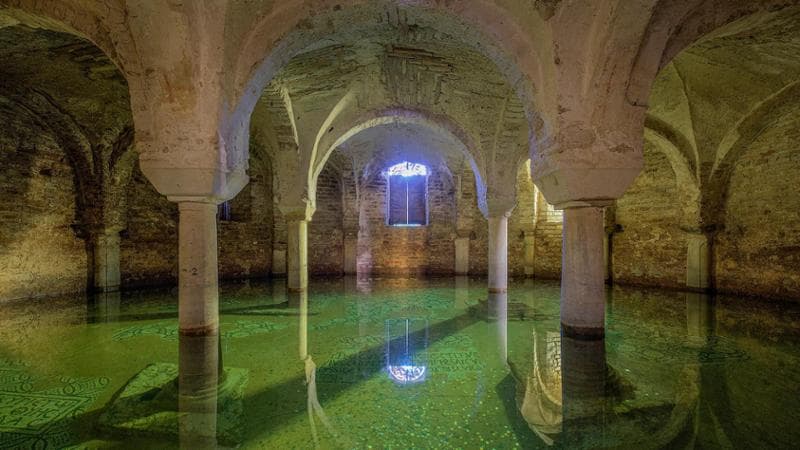
Because of the gradual subsidence of the ground, the crypt’s mosaic floor is permanently submerged beneath a shallow layer of water. Visitors can also spot the goldfish swimming inside, introduced by the Franciscan friars many years ago.
More than just Dante
Ravenna was also a source of inspiration for Dante Alighieri, who wrote the final part of his Divine Comedy here. The city features prominently in the poem, but the great poet was far from the only artist to fall under the spell of this corner of Romagna. George Byron, Gustav Klimt, Gabriele D’Annunzio and Dario Fo were equally captivated by its charms.
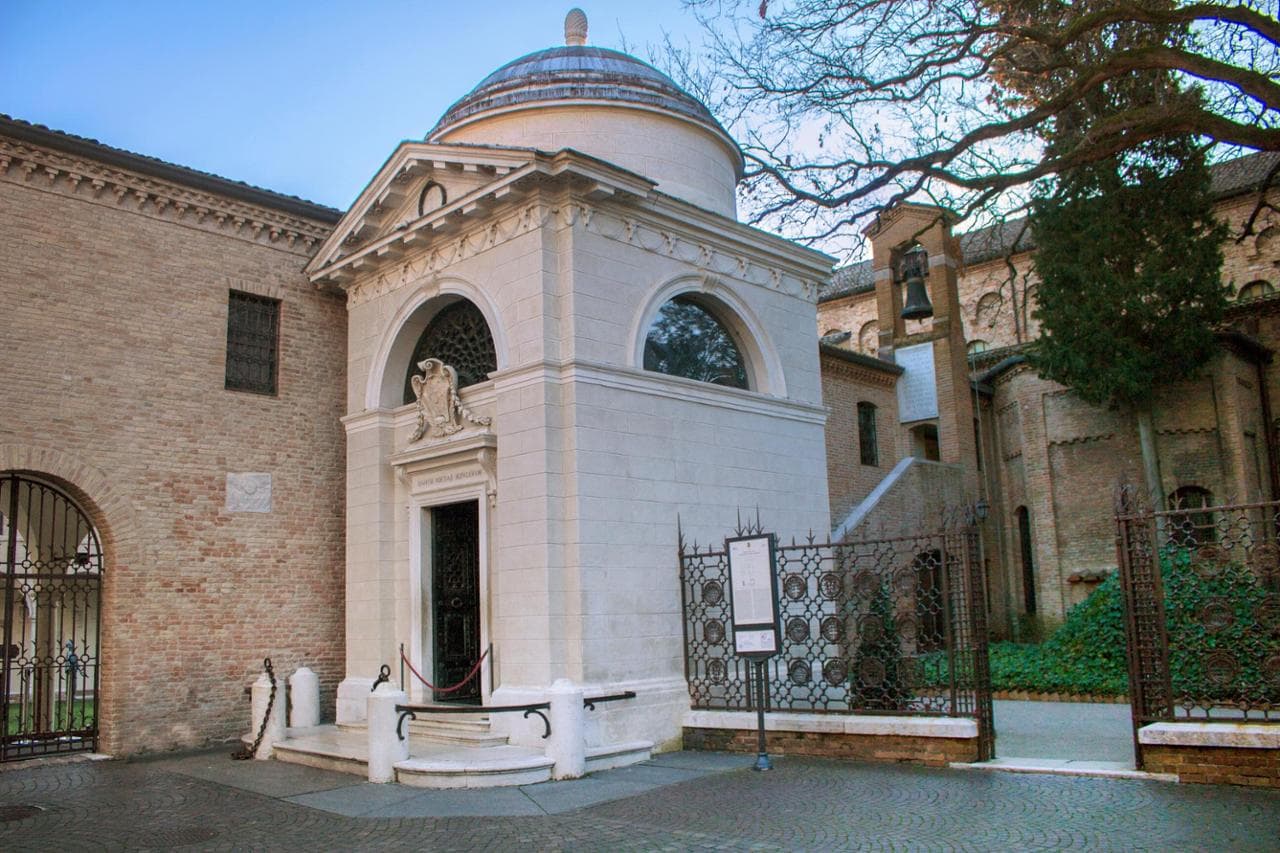
Artists and lovers of beauty from different eras have all been drawn to this Adriatic gem, whose appeal has never been diminished by modernity and whose deep connection with the past remains as strong as ever.
That same connection can be felt along the coastline. Just ten minutes from the historic centre lie centuries-old pine forests and long stretches of sandy beach, ideal for families. The pinewoods of San Vitale and Classe, together with the natural reserves of Punta Alberete and Valle Mandriole, are biodiversity-rich areas that have contributed to the region’s inclusion within the protected landscapes of the Po Delta Park.
Ravenna is also a vibrant cultural destination. The Alighieri Theatre and the Rasi Theatre host outstanding programmes throughout the year, while the Ravenna Festival has established the city as an internationally recognised centre for the performing arts.
Practical tips
To visit the UNESCO sites, it is worth purchasing a combined ticket, priced at €14.50, either at the ticket office opposite the Basilica of San Vitale or online at www.ravennamosaici.it.
The Basilica of San Vitale and the Mausoleum of Galla Placidia are just a ten-minute walk from the hotel, as are the Orthodox Baptistery and the Archiepiscopal Chapel of Sant’Andrea. The Basilica of Sant’Apollinare Nuovo is approximately fifteen minutes away on foot.
Those with a passion for art and traditional craftsmanship can also book a mosaic-making workshop or a short hands-on session in a traditional artisan studio, offering the chance to work with coloured tesserae and discover this ancient craft first-hand.
Alternatively, visitors can book a three-hour guided group tour to explore the fascinating world of Ravenna’s mosaics. Private guided tours covering the city’s main attractions also last approximately three hours.
When it comes to food, Ravenna offers plenty of tempting options. Pizza lovers should not miss Pizzeria Babaleus, renowned for its excellent pizzas and exceptionally friendly staff.
All that remains is to wish you a wonderful trip filled with cultural discoveries and culinary delights.
This article was reviewed by an external translation partner