
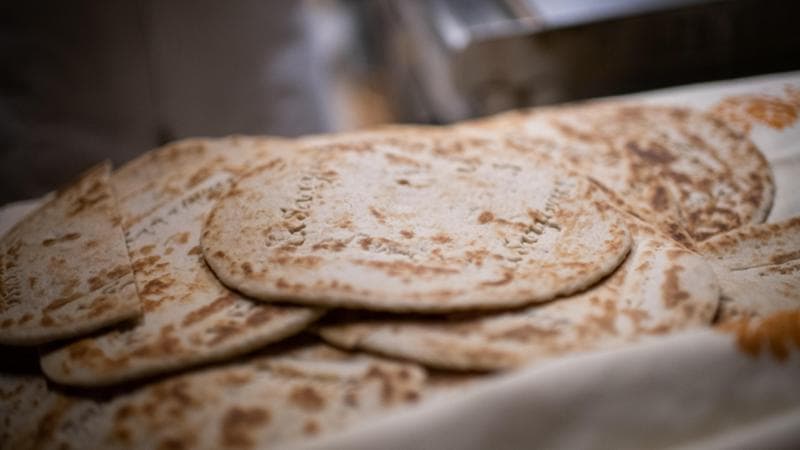
Piadina, also known as piada, is a traditional unleavened flatbread and one of the defining symbols of Romagna’s culinary heritage.
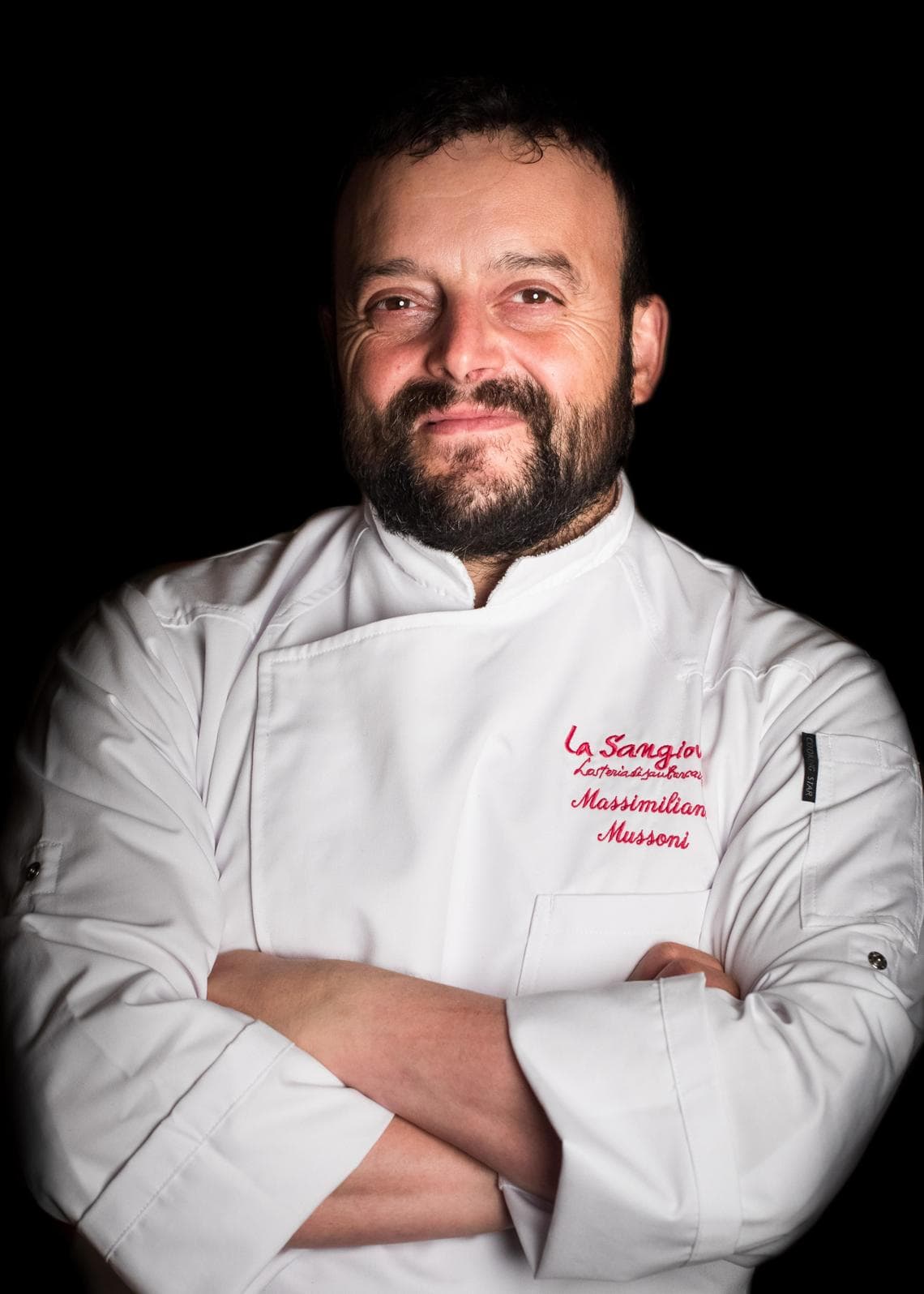
“It took on its modern form in the early twentieth century – the version we know and love today,” explains chef Massimiliano Mussoni, who safeguards and prepares the original recipe at La Sangiovesa, the historic osteria in Santarcangelo di Romagna.
More than just street food
Originally a simple, rustic staple, piadina sustained farming families in the poorer parts of Romagna for centuries. Today, it is enjoyed well beyond the region’s borders and immediately brings to mind the idea of a quick, convenient and satisfying meal.
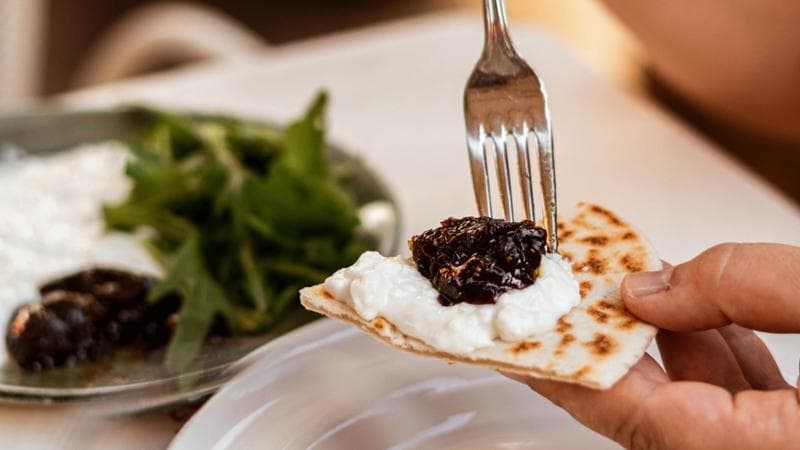
Yet piadina is much more than street food: it can also take the place of bread at the table. “At La Sangiovesa, piadina has always been the only bread we serve,” says Mussoni. “We make it using flour from the Valmarecchia area and lard from free-range pigs raised on our Tenuta Saiano estate.”
This is a traditional recipe made with just a handful of ingredients and a few simple steps. But that simplicity demands precision and an understanding of the craft. Follow the advice of someone who has turned its preparation into an art, and you can make a flatbread that is thin yet soft and perfectly golden, thanks to a delicate balance of ingredients, skill and cooking time.
Ingredients – makes 12 piadine
Although several versions exist (some of which include milk), the Sangiovesa recipe for the perfect piadina calls for 1 kg of type 0 flour, combined with 400–450 g of water, depending on how much liquid the flour absorbs.
Next, add 130 g of lard, or 180 g for a softer result. Those who prefer a vegetarian dough can replace the lard with 150 g of olive oil.
Another essential ingredient is 30 g of what is traditionally known as la dose: a raising-agent mixture made from two parts cream of tartar and one part bicarbonate of soda.
Finally, add the salt: 18 g for the traditional version, increasing to 20 g if using the vegetarian alternative.
Cream of tartar?
Of course, chemical raising agents were not traditionally used in the past. But Mussoni offers some practical advice: “If you don't have cream of tartar, you can use 20 g of bicarbonate of soda or leave it out altogether. Piadina is not a leavened bread.”
He adds: “You don't need high-protein flour. In fact, the higher the protein content, the worse the result. What you need is soft wheat flour, because there is no need for a long proving time.”
Step-by-step preparation
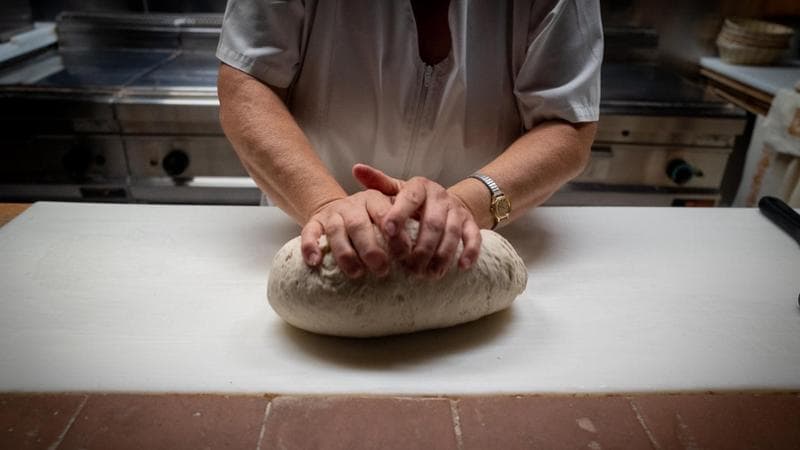
“Make a well in the flour. Put the raising-agent mixture into the flour, then add the water, salt and lard to the centre. Knead until all the ingredients are thoroughly combined.”
Leave the dough to rest for 20–30 minutes, then divide it into balls weighing 110–130 g each.
“The official specifications for Romagna PGI piadina call for eleven to twelve portions of raw dough per kilogram of flour. Once shaped, the dough balls should be left to rest for another five minutes.”
Getting the size right
In Romagna, there is a veritable geography of piadina, with its dimensions changing from one town to the next as you travel inland from Riccione towards Emilia. In Riccione, it is thin, very thin, and wide, very wide. As you move inland from the coast along the Via Emilia, the flatbread gradually becomes smaller in diameter and thicker.
“Piadina varies from town to town: in Riccione, it is as thin as an onion skin, while in Imola it can be as much as one centimetre thick. For me, Santarcangelo is where it reaches its perfect proportions,” Mussoni says with a smile.
“Roll it out with a rolling pin to a thickness of 4–5 mm and a diameter of 26–28 cm. It will rise slightly as it cooks, but should remain less than half a centimetre thick.”
The perfect cooking method
Piadina can be cooked on a terracotta, cast-iron or non-stick griddle.
“My grandmother had a sister who used the traditional terracotta griddle made by the artisans of Montetiffi, in the hills above Santarcangelo. She used to tell me to go and eat piadina at her house because it was better-looking and tasted better.”
Cooking takes around 4–5 minutes in total, approximately two minutes on each side, turning the piadina just once.
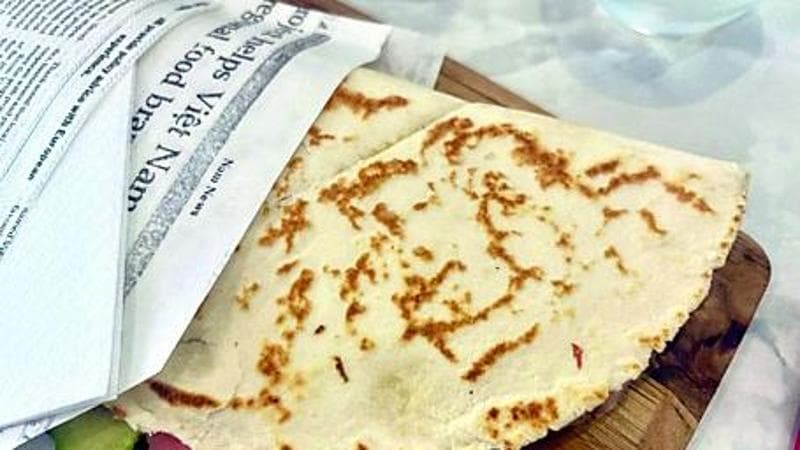
What does the perfect result look like? “Golden in appearance, with an even colour but no burnt patches, cooked through on the inside but not too dark on the outside.”
To prick or not to prick?
“We don't prick ours,” Mussoni explains. “If you use a natural raising agent, there's no need. A chemical raising agent can cause bubbles to form, in which case you can prick the dough. But with this recipe, it's unnecessary.”
One final tip: keep an eye on the temperature
“The biggest challenge? There isn't one, provided you choose the right flour and keep an eye on the temperature. In summer, for example, when temperatures rise above 30°C, I recommend using cold lard or oil, along with flour and water straight from the fridge. Otherwise, the dough won't come together properly.”
More than a recipe: a way of life
“Piadina is all about hospitality and togetherness. That's the way it has always been in Romagna. Whenever a guest arrives, even unexpectedly, you can quickly prepare it using inexpensive ingredients that are already in the pantry, offering something simple and delicious. It's the humblest of foods, yet everyone loves it.”
This article was reviewed by an external translation partner