

ROME – A “very positive and constructive” conversation. That was how Italy’s Minister of Infrastructure and Transport, Matteo Salvini, described his call with Elon Musk, the owner of Tesla, to discuss autonomous driving.
Autonomous driving remains a marginal reality in Italy and across Europe, if not virtually non-existent. And the conversation between the two has reignited the debate.
Salvini himself reported the exchange on X, confirming the Italian government's interest in new technologies and expressing hope that Europe would swiftly approve the advanced driver-assistance system developed by Tesla.
Speaking later at a logistics conference in Genoa focused on north-western Italy, the deputy prime minister said he had asked ministry officials “to open up, as far as current regulations allow, to innovations already being used in other countries”.
The aim is also to attract investment in technology and the automotive sectors. Of course, questions surrounding insurance and civil and criminal liability remain unresolved. But Salvini argues that these issues should not “close the door to the future”.
The different levels of autonomous driving
Despite its name, Tesla's Full Self-Driving (Supervised) system does not allow a car to drive entirely on its own. It can control steering, speed, lane changes and other manoeuvres, but the person behind the wheel must constantly monitor the road and be ready to intervene.
It is therefore an advanced driver-assistance system generally classified as Level 2 automation, meaning responsibility remains with the driver.
Levels 3 and 4, by contrast, allow vehicles to take over driving under certain conditions or within designated areas. This is the category that includes robotaxis, driverless shuttles and automated vehicles used in logistics.
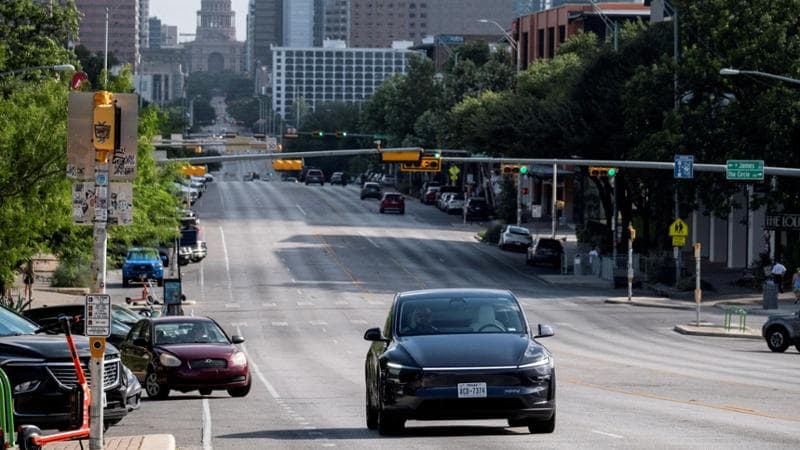
Tesla is seeking approval through European vehicle type-approval procedures. Technical authorisation could make it easier for the company to enter the EU market, but it would not eliminate differences between national laws.
Brussels is primarily responsible for setting technical and safety requirements, while individual member states retain control over road use, insurance, access to public roads and liability in the event of an accident.
The situation in Italy and across Europe
In Italy, on-road testing has been permitted since the 2018 Smart Road decree, but it requires ministerial authorisation, designated routes, insurance cover and a supervisor capable of intervening.
What is still missing, however, is a comprehensive regulatory framework allowing fully driverless vehicles to be deployed commercially.
One of the most sensitive issues concerns the supervisor. Requiring someone to be physically present on board could make services such as robotaxis and autonomous shuttles economically unviable.
Under Italy's current Highway Code, driverless vehicles are still not allowed to circulate freely on public roads.
Germany and France have already authorised automated driving in specific areas or along designated routes, subject to strict conditions and supervision. But Europe has yet to introduce any general liberalisation of driverless transport.
As of October 2026, robotaxis regularly carry passengers in 32 cities worldwide. In 17 of those cities, paid services operate without a driver on board, mainly in the United States and China. Not one of these cities is in Europe.
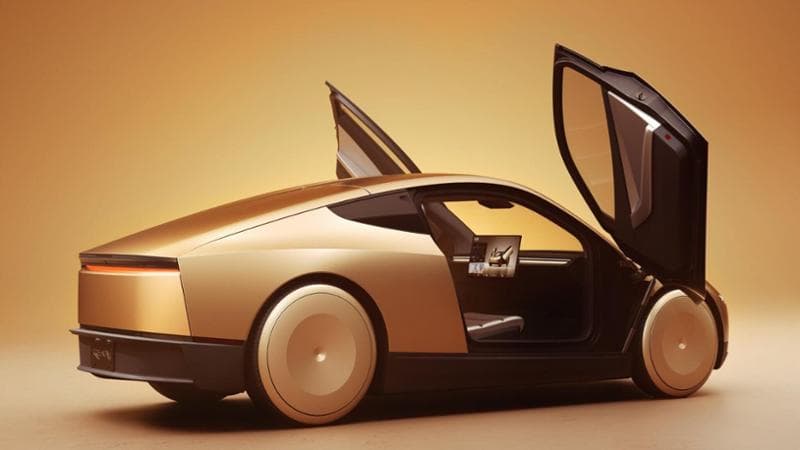
Regulators are also adapting their rules to accommodate vehicles without conventional steering wheels or pedals.
Waymo continues to expand its services, while an agreement with Toyota provides for trials in Japan from 2027 using electric SUVs equipped with Level 4 autonomous driving technology.
Trials and projects are also multiplying across Europe, from Copenhagen to Madrid, Zurich and London, involving companies such as Pony.ai, Uber and Vright, as well as operators including Baidu and Waymo. Yet the regulatory landscape remains fragmented.
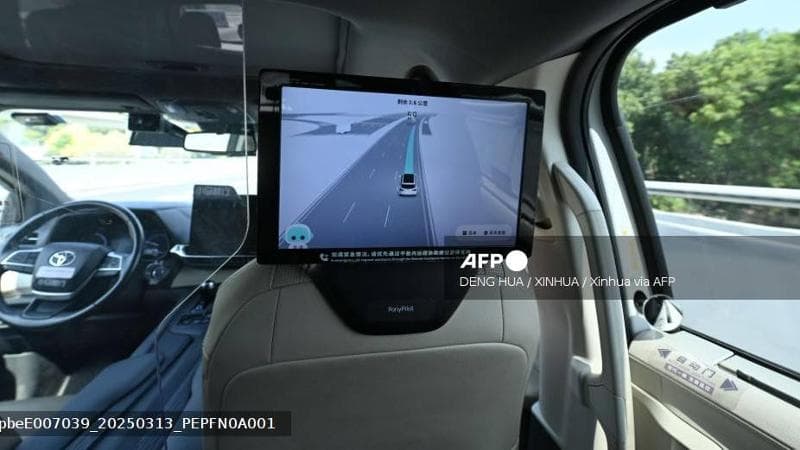
A display inside a Pony.ai robotaxi in Guangzhou, China.
In Italy, attention is also turning to Milan, where projects have been announced involving autonomous Fiat 500e cars developed with the start-up Niulinx, alongside automated car-sharing solutions from Neon Lynx, a company founded within the Polytechnic University of Milan.
The challenge now is to turn these trials into real-world services, striking a balance between innovation, safety and legal responsibility.
This article was reviewed by an external translation partner