
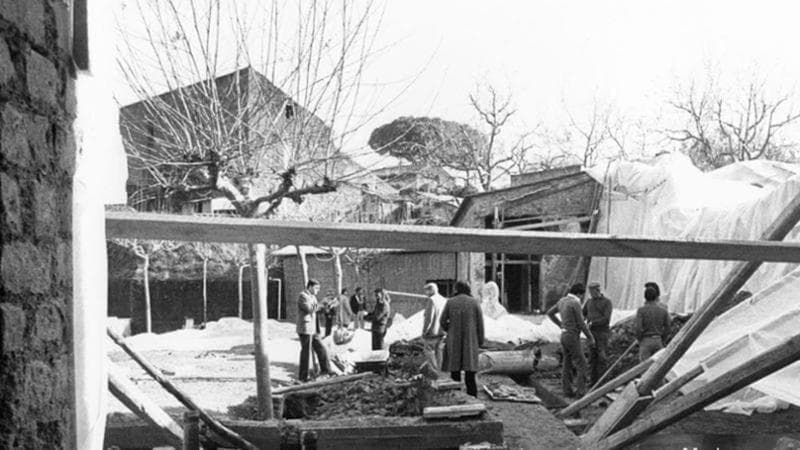
Terracarne is a book leaning resolutely forward. Those who have followed the Campania-born poet and writer Franco Arminio since his early days will see a long journey taking shape, while also paving the way for what is to come.
What has changed
Fifteen years after its initial publication, this book returns to readers in a profoundly changed context. Arminio has become much more than a reclusive writer from eastern Irpinia.
Today, Arminio is a poet read by thousands; an author who has brought poetry back into public squares, theatres, and small towns; the founder of the cultural festival La Luna e i calanchi ("The Moon and the Badlands"); and the driving force behind the Comunità Provvisorie ("Provisional Communities").
He is, in short, one of the most recognizable public voices in contemporary Italian literature.
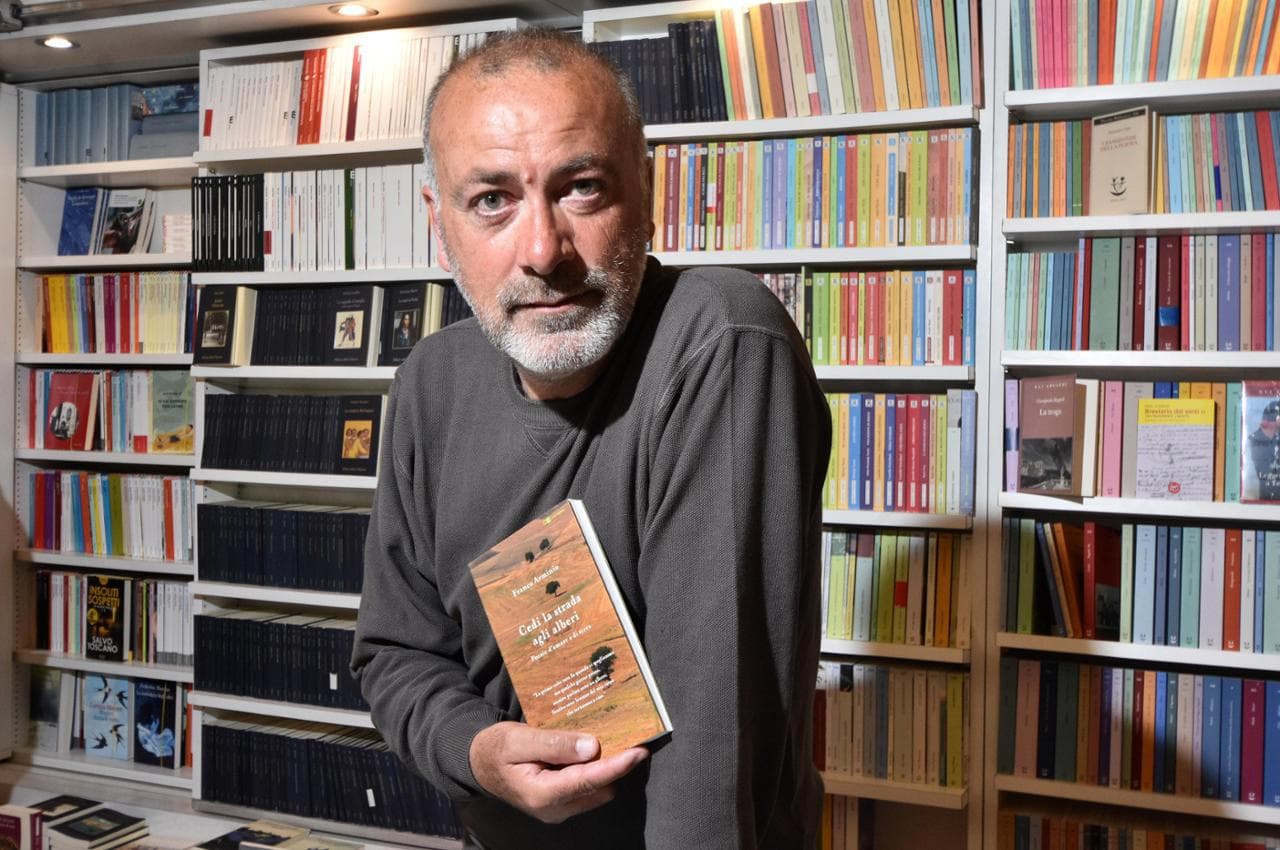
This dual perspective—spanning past and future—allows us to see Terracarne for what it truly is: the place where an apprenticeship of the gaze finally finds its name. That name is "paesology."
Paesology
Paesology is, above all, an invitation.
In 2011, the book introduced it like this: "To live in a small town, you must shed all arrogance. It doesn't matter whether you hide it or let it flow. Arrogance can be felt; it acts like an acid, corroding your bonds with others. The town is a creature asking you for mercy."
A few lines later came what would become the most famous definition of the discipline founded by Arminio: "Something midway between ethnology and poetry," "not a human science," but "a surrendered science," useful, he wrote, "for remaining defenceless, immature." It is a manifesto, certainly; but it is by no means an absolute beginning.
When Terracarne first saw the light of day, Franco Arminio had already been writing about small towns, earthquakes, bodies, and disorientation for many years.
The "paesologist" had already introduced himself in Diario civile (1999), Viaggio nel cratere (2003), Vento forte tra Lacedonia e Candela (2008), Nevica e ho le prove (2009), Oratorio bizantino (2011), and in Cartoline dai morti (2010)—where one of the most radical strands of his writing (the brief, stripped-back voice of a posthumous humanity surrendered to its own finitude) had already achieved a fully realized form.
Terracarne thus brought together threads that were already in place, giving them concepts and a shared horizon.
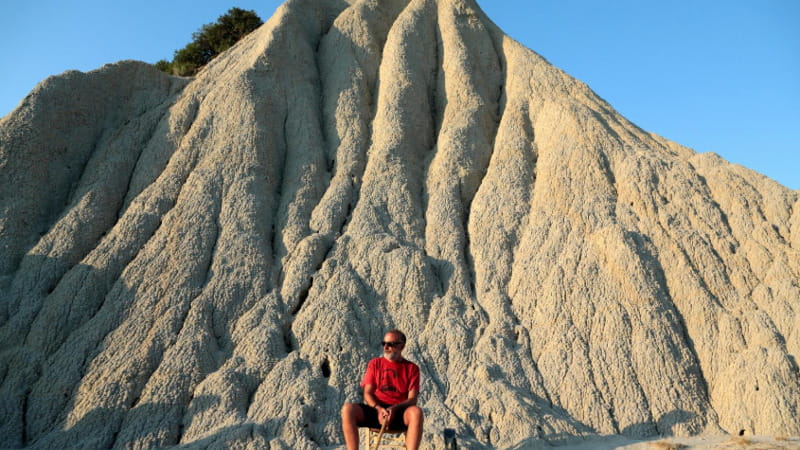
It all began with the earthquake
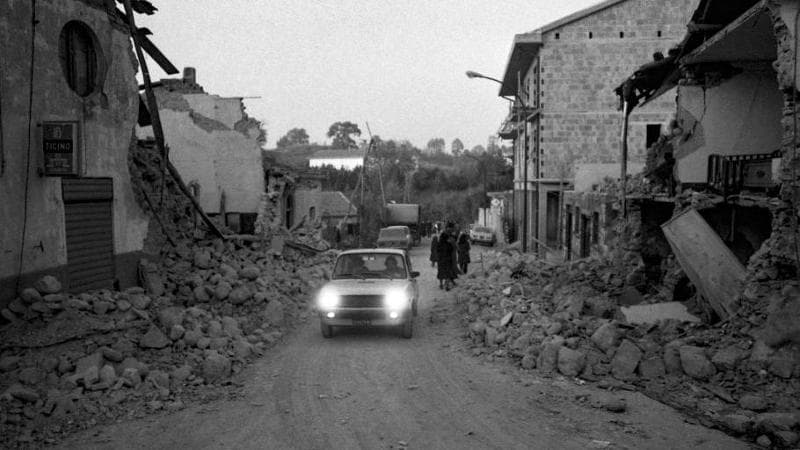
All of this has a precise origin. Or rather, a fault line: the earthquake of November 23, 1980. In Terracarne, Arminio recalls standing in a square of Teora, facing the rubble of a bar that had vanished alongside its patrons. "I felt a sense of sorrow," he writes, "thinking that I had never been to Teora before the earthquake, for that vision lost forever."
Thus began the trade he would invent to tame trauma: visiting small towns to see if they were still alive, "to see what they were like, how they were transforming."
From that moment on, the earthquake ceased to be merely a geological event and became a way of seeing—a perspective Arminio would never abandon, whether writing about real or imagined towns, or speaking of love, politics, sex, and the sacred. There are always ruins or landslides accompanying him, both in sleep and in waking life.
The watershed
The Irpinia earthquake was one of the great watersheds in the history of Southern Italy. Nearly half a century later, however, a crucial distinction remains to be made. The earthquake did not strike a static South outside of history, but a poor, peripheral South that was, in many places, undergoing a slow transformation.
The distinguished Southern scholar Manlio Rossi-Doria famously termed these inland areas the "land of the bone," contrasting them with the more fertile and well-connected "land of the pulp." Yet it would be a mistake to read his metaphor as a portrait of a body already extinct.
Those communities were characterized by rich and complex ways of life, changing economies, and a still-vital balance between small towns and the surrounding territory. Without romanticizing, one could say these were places still present to themselves, sustained by a landscape that preserved generational memory and continued to offer its inhabitants a shared material and symbolic geography.
Catastrophe as a political system
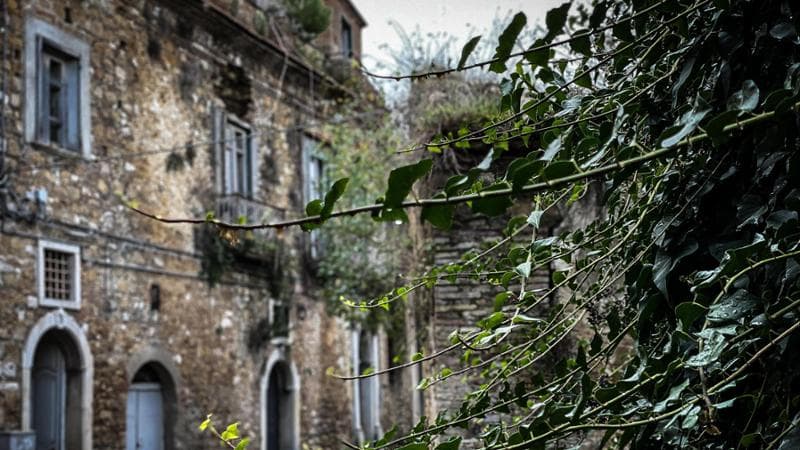
It was the aftermath, more than the earthquake itself, that shattered that balance. The reconstruction effort turned catastrophe into a political system: concrete replaced social bonds, private speculation supplanted community life, and the state of emergency became a standard technique of territorial governance.
Around this system, patronage and corruption flourished, alongside urban expansion that enlarged towns while simultaneously hollowing them out. Perhaps the most precise formulation of this paradox came years later in Arminio's Geography of Emotion in Inland Italy (2013), written from the crater of another earthquake, L’Aquila: "The citizen was given a house, but robbed of their town."
The collapse of the collective narrative
In Irpinia, it was not merely houses that collapsed, but the collective narrative itself. It was the loss of what the great anthropologist Ernesto De Martino called the "horizon of worldly operability": that system of relationships enabling human beings to inhabit their world without losing their way.
Landscape, as De Martino taught, is the raw material of a choral narrative that secures the bonds between generations. It is no mere backdrop, but something handed down from one generation to the next—and a source of reassurance. It whispers: "Go on, you are not alone, you are not the first, you are not the only one; you stand within a vast, marching host, only an infinitely small fraction of which is made up of the living."
When this fabric unravelled, the earthquake-stricken populations suddenly found themselves displaced from their own history. Towns ceased to reflect these communities. They lost their aura; they stopped breathing.
The small town is not the province
In one of the most beautiful passages of Viaggio nel cratere, Arminio describes this invisible atmosphere as a "psychological aerosol": a life-giving sap released by places and unconsciously absorbed by their inhabitants. When that sap dissolves, it is not merely buildings or public squares that are lost. What disappears is a singular, unrepeatable way of inhabiting the world—even if one consciously seeks to escape from it.
This also reveals why the small town never coincides with the province. The province exists solely in relation to a centre; its consciousness is a satellite consciousness. The small town is something else entirely. It does not exist by contrast with a real or symbolic capital. The small town is a satellite to nothing. It is a world unto itself—like a meteorite orbiting through space, a nebula taking shape, a streak of light.
If small towns sometimes appear to us as a constellation, it is because they share the same light: a discreet, never dazzling glow, closer to a votive candle than to a sun. Small towns form alliances forged in silence.
This text is an excerpt from the foreword to the new edition of 'Terracarne'.
This article was reviewed by an external translation partner