
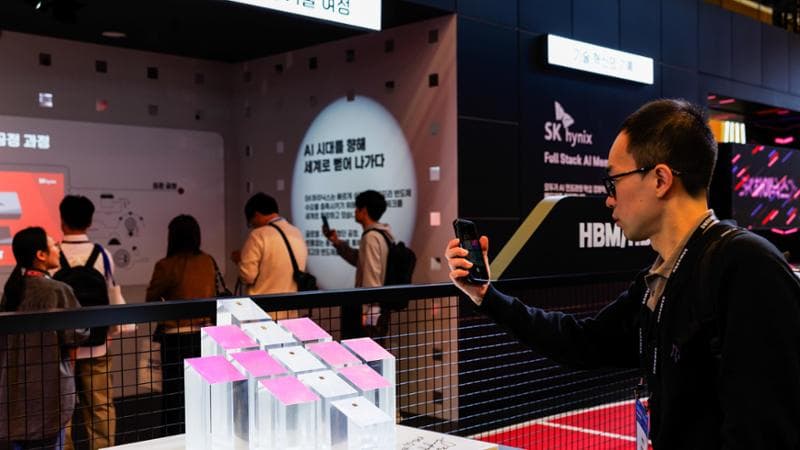
Semiconductors, artificial intelligence, data centres. South Korea has drawn up a record budget to “achieve world-class performance”, President Lee Jae-myung said in parliament. Among the items in the 2027 budget, the Seoul government has earmarked an unprecedented sum of 21.3 trillion won (€14.3bn) – double this year’s allocation – for a massive investment plan in AI. This will serve to boost economic growth and strengthen South Korea’s technological edge as global competition in the field of artificial intelligence intensifies.
The Lee government’s budget (totalling 821 trillion won, up 12.8 per cent on the 2026 budget and the largest ever presented) must be approved by parliament, but this is almost a formality given the Democratic Party’s majority in the National Assembly. ‘Countless tasks and challenges, as well as a rapidly evolving global security landscape, make it necessary for rival parties to join forces to build the country’s future and improve citizens’ lives,’ the president said, calling on MPs to ensure the budget law is passed by 2 December. “Lee’s speech in parliament was met with protests from opposition members, who accused the government of increasing public debt,” reports the South Korean press.
Growth exceeds expectations
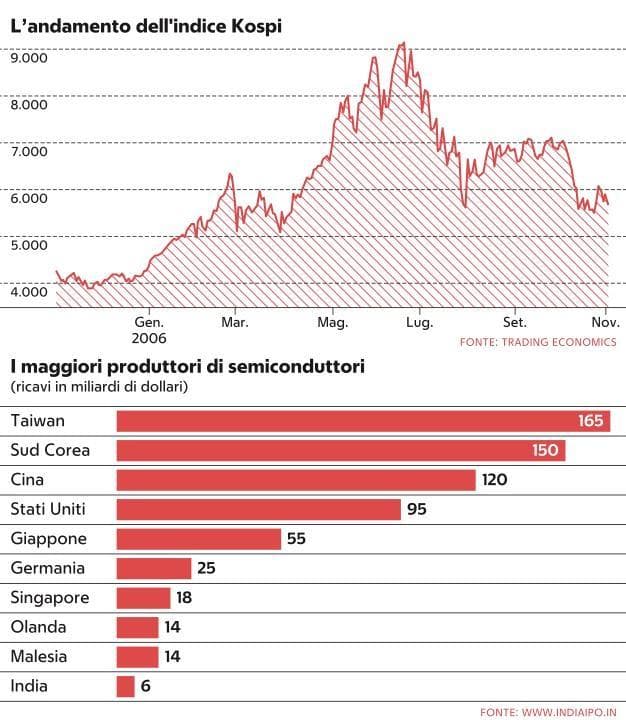
Asia’s fourth-largest economy recorded better-than-expected growth in the third quarter, driven primarily by chip exports. From January to October, total exports reached $930bn and are on track to exceed $1tn this year, making South Korea the fourth country to reach this milestone after the United States, China and Germany. The semiconductor sector continued to be the main driver of growth, with chip exports soaring by 259 per cent compared with the previous year, reaching $56.4bn.
Not everyone, however, is sharing in the spoils. This is why Seoul has decided to set up a 162.3 trillion won Fund for the Future, due to come into operation next year,financed largely by additional tax revenue from the semiconductor boom, to support young people, regional development and education. “In this way, we will reduce the deep disparities within our society, whilst building solid foundations for growth and development,” President Lee explained last week. “We must make a major transition from ‘growth for the few’ – where opportunities and gains are concentrated in certain regions, social classes and a small number of companies – to ‘growth for all’,” he said.
Mega-projects in the chip sector
Lee is simultaneously pushing ahead with mega-projects centred on chips, physical artificial intelligence and data centres. Back in June, the South Korean government had already unveiled a ten-year plan for the construction of advanced semiconductor factories and data centres dedicated to artificial intelligence. The two giants of the sector – Samsung and SK hynix – are, of course, entering the fray. The two leading memory-chip manufacturers have seen their profits and share prices soar in recent months, riding the wave of the global artificial intelligence boom.
The sharp increase in the 2027 budget was made possible by forecasts of rising tax revenue, in the wake of record profits posted by semiconductor giants, including Samsung Electronics and SK hynix, fuelled by the artificial intelligence boom that has sent demand for chips soaring, Yonhap stressed. At the end of October, Samsung announced its third-quarter financial results: the company’s operating profit reached 107.4 trillion won (€71.6bn). This is the first time a South Korean company has recorded a quarterly operating profit exceeding 100 trillion won. Strong demand for chips for the data centres powering artificial intelligence has translated into record profits and share prices for companies such as Samsung. The value of the South Korean company’s shares has more than doubled this year, bringing its market capitalisation to around 1.3 trillion dollars.
Investment in technology is therefore at the heart of the spending plan. “We will invest boldly in artificial intelligence and future growth engines to boost the potential of our economy,” Lee said. “The proposal allocates 2,000 billion won to expand semiconductor production capacity, including speeding up the construction of chip manufacturing plants near Seoul and developing an industrial hub in the south-west of the country. A further 4,700 billion won will support cutting-edge development in artificial intelligence, with the aim of producing in-house models capable of competing with leading global models,” explains the South Korean press.
Lee also announced an 8.2 per cent increase in next year’s defence budget, which will reach 73.3 trillion won, with the aim of acquiring nuclear-powered submarines and KF-21 fighter jets. Lee said that Seoul aims to "rapidly transform our armed forces into an elite force, creating integrated manned and unmanned systems based on artificial intelligence, robots and drones".
“In addition to technology and defence, Lee has also promised an expansion of welfare support, with spending on young people set to rise by 53.5 per cent, reaching 43.3 trillion won,” writes the Korea Herald. “The plan includes marriage grants of 1 million won and an increase in child benefits.”