
75 souvenirs to capture the elusive Savinio
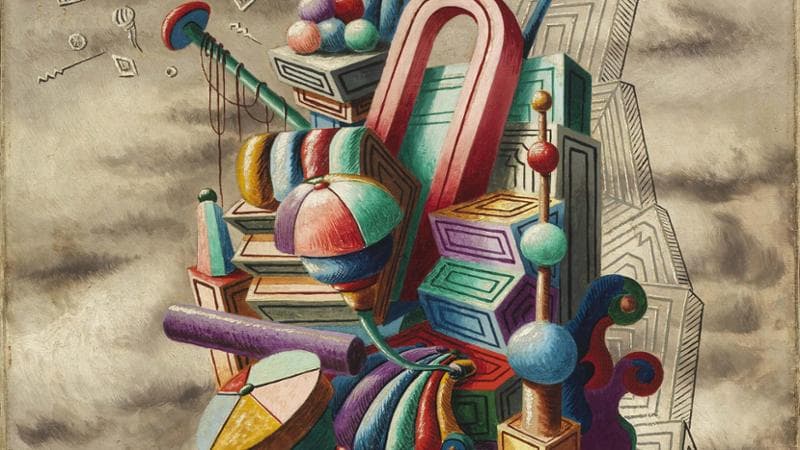
TURIN – "Souvenirs. What is sadder than memories?" wrote Alberto Savinio in the preface to his collection of iconoclastic journalistic dispatches from Paris, published in 1945. Fragments, memories—yet entirely devoid of nostalgia—such as those featured in the major retrospective dedicated to the metaphysical painter, curated by Sarah Cosulich and Pietro Rigolo, which opens the autumn season at the Pinacoteca Agnelli.
Alberto Savinio: Souvenirs, produced in collaboration with the Alberto Savinio Archive and supported by an international scientific committee, brings together seventy-five works, including paintings and drawings created between the 1920s and the early 1950s, offering a fresh reading of the artist's visual research. This is not a chronology, but a journey into the imagination of one of the most eclectic intellectuals of 20th-century Europe. Born in Athens in 1891 as Andrea de Chirico, and brother to Giorgio, Savinio was a multifaceted and elusive figure—musician, writer, painter, and set designer—capable of weaving together Greek classicism, family folklore, and metaphysical overtones into a unique visual language.
The Turin exhibition touches upon his most celebrated themes: the Greece of his early youth; anthropomorphic landscapes; mythical "toys"; and unsettling hybrid figures where the human merges with the animal. It is a valuable opportunity to rediscover the work of an artist who anticipated questions that remain central today, such as the relationship between identity and representation, dialogue between cultures, and the redemptive power of the imagination. Accompanying the exhibition is a bilingual catalogue (Mousse Publishing), the first institutional publication in English dedicated to Savinio. (Elisabetta Berti)
Alberto Savinio. Souvenir
Where: Turin — Pinacoteca Agnelli, Via Nizza 262
When: Until April 4, 2027
Tickets & Hours: Full €12; reduced €8. Tuesday to Sunday 10 AM–6 PM; closed Monday.
Info: Tel. +39 011-0925024 | www.pinacoteca-agnelli.it | Catalogue by Mousse Publishing
Matisse's journeys in search of light
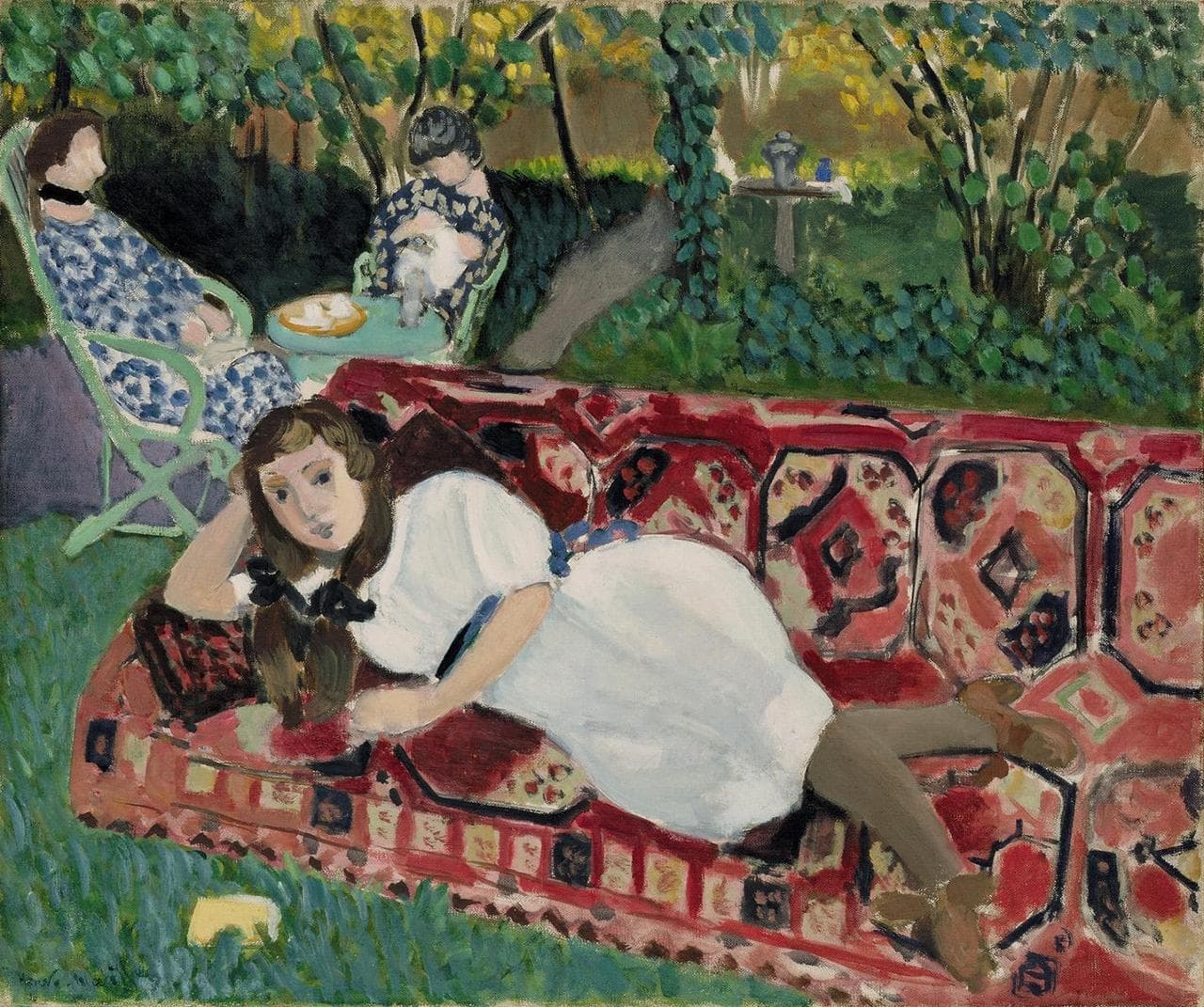
MILAN – He was twenty years old, was on the verge of completing a law degree, and a mind-numbingly boring job in a notary's office. Then came appendicitis and, with it, a box of paints. His mother gave it to him to pass the time during his convalescence. Henri Matisse, son of a seed merchant from northern France, discovered "a kind of paradise" and never left it. From that bed in Le Cateau-Cambrésis starts the journey retraced by Milan's Mudec in Matisse: The World in a Room, curated by Ellen McBreen and Chiara Gatti. One hundred works and a thesis: Matisse built his "world" by plundering half the planet. Matisse was an obsessive traveller and a compulsive collector. In 1911, he arrived in Moscow and, standing before the icons, confessed that he had spent ten years searching for what the Russians had already found in the 14th century. He returned from Morocco with photographs taken by his own hand, on display here for the first time.
At sixty, in the midst of a creative crisis, he boarded a steamship for Tahiti and spent weeks swimming in the lagoon, suspended between sea and sky. Years later, that "blessed disorientation" gave birth to the Océanie panels, which visitors to Milan can finally admire up close. He also travelled through New York and San Francisco, then Panama, Martinique, and Guadeloupe in search of a "spiritual light."
At the Hôtel Régina in Nice, the now-elderly artist transformed his room into a tropical garden of memory: he surrounded himself with Kuba textiles from the Congo, Yoruba masks, North African furniture, and a large black-lacquered Chinese panel gifted by his wife Amélie. When illness confined him to an armchair, he did not stop: with a pair of scissors, he invented his cut-outs (papiers découpés). This creative phase also gave rise to the Vence Chapel, which the Mudec evokes through drawings dedicated to Saint Dominic, the founder of the order.
The exhibition path concludes before his final painting—Femme à la gandoura bleue (1951)—and a sculpture in which a woman raises her arms like a plane tree. A body transforming into a tree: the final inspiration had been suggested to him by Chinese masters. The world, precisely, in a room. (Brunella Schisa)
Matisse. Il mondo in una stanza (Matisse: The World in a Room)
Where: Milan — Mudec, Via Tortona 56
When: Until February 21, 2027
Tickets & Hours: Full €18; reduced €16. Monday 2:30 PM–7:30 PM; Tue, Wed, Fri, Sat, Sun 9:30 AM–7:30 PM; Thursday 9:30 AM–10:30 PM.
Info: Tel. +39 02-54917 | www.mudec.it | Catalogue by 24 Ore Cultura
The Scharf Collection: Two centuries of masterpieces
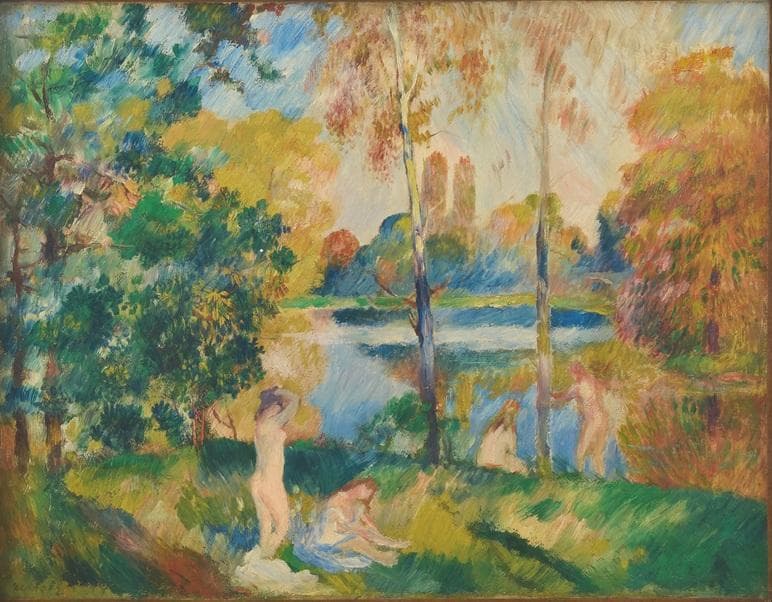
GENOA – The paintings in a collection tell the story of those who desired and loved them. They also trace a history of taste, trends, a connoisseur's intuition, and the tides of the market. Such is the story told by Renoir, Monet, Toulouse-Lautrec, Cézanne: 200 Years of Art from the Scharf Collection, an exhibition at Genoa’s Palazzo Ducale devoted to the collection assembled by Otto Gerstenberg, who headed the prestigious Victoria Insurance company in Berlin in the 1880s.
Otto, sensitive to the great beauty of art, surrounded himself with works from every era and geography, ranging from German Renaissance prints to 17th-century Dutch masters, up to the emerging French Impressionists of his own time.
For his corpus of engravings, he had a custom stamp made featuring an image of a winged Victory with a laurel wreath, a symbol of wisdom and virtue. When he died in 1935, the collection amounted to over 2,000 pieces. It was a collection of museum quality, unique in Germany, inherited by his daughter Margarethe, a university-trained nurse who married the physicist Johann Georg Scharf, taking his surname and passing it on to her father's collection.
With the outbreak of the Second World War, some works were shipped off to the safe deposits of German museums; others were destroyed in bombings; and still others were looted as spoils of war. Partially recovered thanks to recent restitution efforts, Otto’s surviving collection was returned to his heirs and moved several times under extraordinary circumstances, while new works were added through the passion of his grandchildren, particularly Walter Scharf and his wife Eve.
The mission was then entrusted to their only son René, who cultivated his great-grandfather's passion, carrying his vocation for art into the New York of Andy Warhol and Leo Castelli. The Genoese exhibition, spanning from 19th-century masters to post-war greats, brings full circle this extraordinary family epic. (Chiara Gatti)
Renoir, Monet, Toulouse-Lautrec, Cézanne. 200 anni di arte dalla Collezione Scharf (Renoir, Monet, Toulouse-Lautrec, Cézanne: 200 Years of Art from the Scharf Collection)
Where: Genoa — Palazzo Ducale, Piazza Giacomo Matteotti 9 (Sottoporticato)
When: Until May 2, 2027
Tickets & Hours: Full €20; reduced €18. Monday 2:30 PM–7:30 PM; Tue–Thu and Sun 10 AM–7:30 PM; Fri and Sat 10 AM–8 PM.
Info: Tel. +39 010-8171600 | www.palazzoducale.genova.it | Catalogue by Moebius
RAMMELLZEE: The rap artist from the future lands in Bolzano
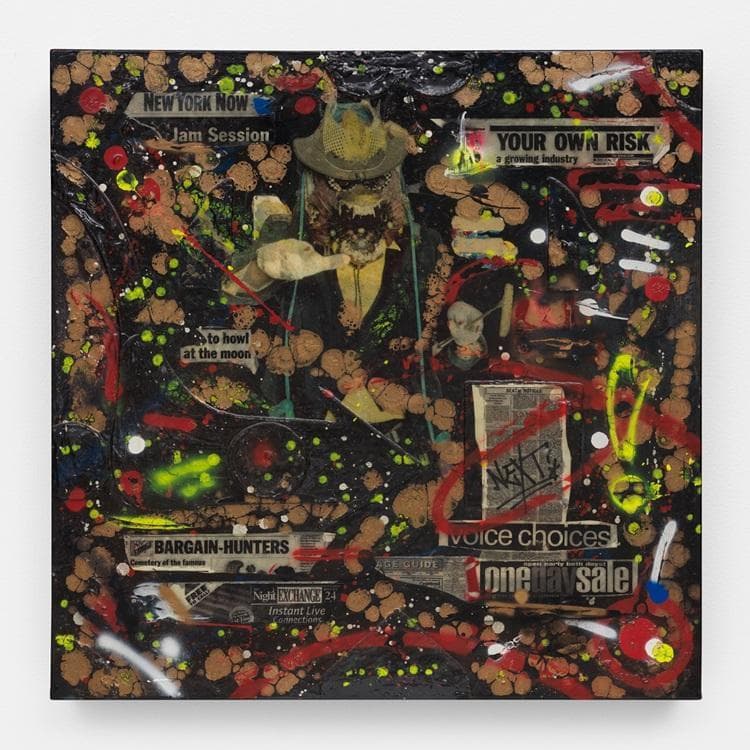
BOLZANO – Before street art became a market department, before hip-hop entered museums, and before artists defined themselves as "multidisciplinary" in their Instagram bios, RAMMELLZEE had already done it all. And he did it with a name that looked like a password.
Born in 1960 in Far Rockaway, a neighbourhood in Queens, New York, RAMMELLZEE was an artist, theorist, musician, and performer who died in 2010. He was one of the most enigmatic figures of 1980s New York, an era when the subway, graffiti, rap, art, and fashion had not yet learned to stay politely within their respective boxes. In 1979, he developed Gothic Futurism and Iconoclastic Panzerism, theories in which even letters became weapons against the standardization of language. Indeed, the label of graffiti artist felt too restrictive to him; he considered "graffiti" a tag pinned on from the outside.
From October 17, 2026, to March 14, 2027, the Museion in Bolzano dedicates RAMM:ELL:ZEE: TIME:LINE to him. This marks the third and final chapter of the first major European retrospective on the artist, curated by Hugo Vitrani and Cédric Fauq, following stops at the Palais de Tokyo in Paris and the CAPC in Bordeaux.
Bolzano is the sole Italian stop. And Italy itself provides the plot twist: the exhibition reconstructs RAMMELLZEE's relationship with Italian Futurism and his travels through Milan, Bologna, and Martina Franca, showing how that old Futurist obsession with speed, machines, and destruction could end up, decades later, inside the tunnels of the New York subway.
Along the way, RAMMELLZEE rubbed shoulders with a universe where one could find Jean-Michel Basquiat—who designed the cover for his single Beat Bop—alongside Madonna, Futura 2000, Bootsy Collins, Valentino, and Jim Jarmusch, who cast him in Stranger Than Paradise. His voice would go on to influence the Beastie Boys, Cypress Hill, and MF DOOM.
Today, all of this feels perfectly contemporary. Perhaps because RAMMELLZEE was not ahead of his times. It was the times that were lagging behind him. (Germano D'Acquisto)
RAMM:ELL:ZEE. TIME:LINE
Where: Bolzano — Museion, Piazza Piero Siena 1
When: Until March 14, 2027
Tickets & Hours: Full €10; reduced €5. Tue, Wed, Fri, Sat, Sun 10 AM–6 PM; Thursday 10 AM–10 PM; closed Monday.
Info: Tel. +39 0471-223413 | www.museion.it | Catalogue by JRP | Editions
How the great Viennese masters reimagined the body
MESTRE – The body has always been a problem. Too naked, too erotic, too old, too female, too different. For centuries we have tried to discipline it, and for at least a century artists have been doing the exact opposite.
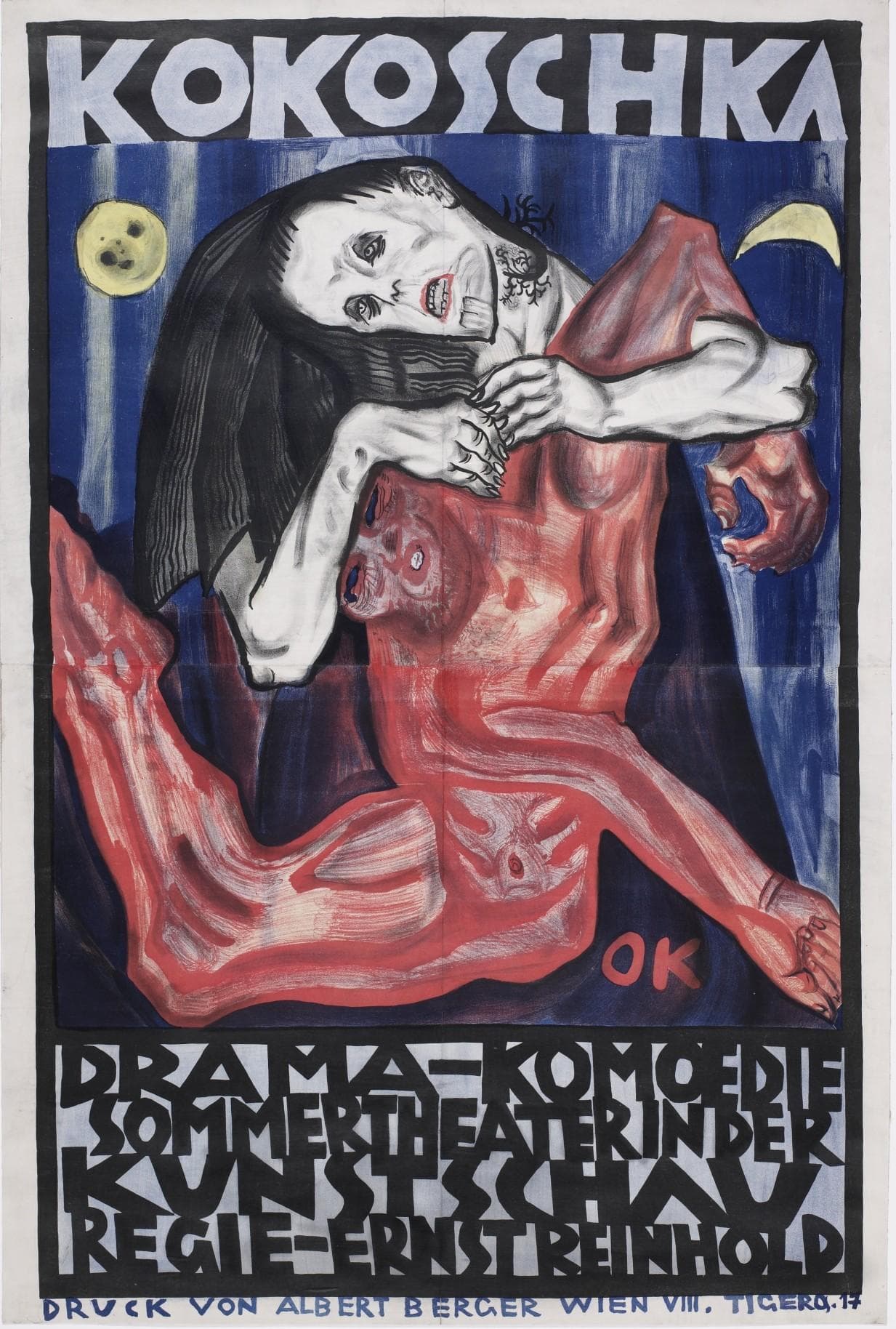
This battle, which remains surprisingly open, serves as the starting point for Klimt, Schiele, Kokoschka and the Body in Contemporary Art, running until February 14, 2027, at Muvec – Casa delle Contemporaneità in Mestre, the Venetian mainland's first museum entirely dedicated to contemporary art. Curated by Elisabetta Barisoni, the exhibition brings together 47 works and takes literally—while updating—the motto of the Vienna Secession: to every age its own body, to every body its own freedom.
It begins with a woman who, back in 1909, had already stopped asking for permission. This is Gustav Klimt’s Judith II, a masterpiece from Ca’ Pesaro: edgy, sensual, anti-classical, with near-claw-like hands and a physicality that escapes the reassuring role of the object of desire. Klimt leads women out of mere ornamentation; Schiele takes a further step, almost hurling them into reality. His bodies become lean, sickly, sexualized, alienated. Finally, Kokoschka shifts the battle beneath the skin: deformations and chromatic dissonances transform the figure into an X-ray of the unconscious. But the most interesting part comes when the three Viennese masters cease to be the end point and become the starting point.
The exhibition journey winds through the "return to order" of the 1920s and 1930s, when totalitarian regimes dreamed once more of athletic male bodies and women destined solely for motherhood and the homeland; it passes through the physical erasure of the war years and arrives at the 1960s and 1970s, when the body breaks out of the frame. With Yves Klein, it becomes a living imprint; with Piero Manzoni, a living work of art; with Ana Mendieta and Gina Pane, it steps directly onto the stage, navigating skin, blood, pain, and politics.
It is here that an exhibition rooted in Freud's Vienna becomes strikingly relevant to 2026. Fluid, surgically altered, exhibited, or corrected bodies continue to dominate art, politics, and social media. The technologies have changed, but the obsession has not. Perhaps Klimt, Schiele, and Kokoschka do not strike us as contemporary because they predicted the future. Quite simply, when it comes to the body, we are still terribly 20th-century. (Germano D'Acquisto)
Klimt, Schiele, Kokoschka e il corpo nell’arte contemporanea (Klimt, Schiele, Kokoschka and the Body in Contemporary Art)
Where: Mestre — Muvec, Piazzale Candiani 7
When: Until February 14, 2027
Tickets & Hours: Full €7; reduced €3.50. Tuesday to Sunday 10 AM–7 PM; closed Monday.
Info: Tel. +39 041-2405263 | www.muvemestre.visitmuve.it | Catalogue by Lineadacqua
Beyond muses: The other faces of women
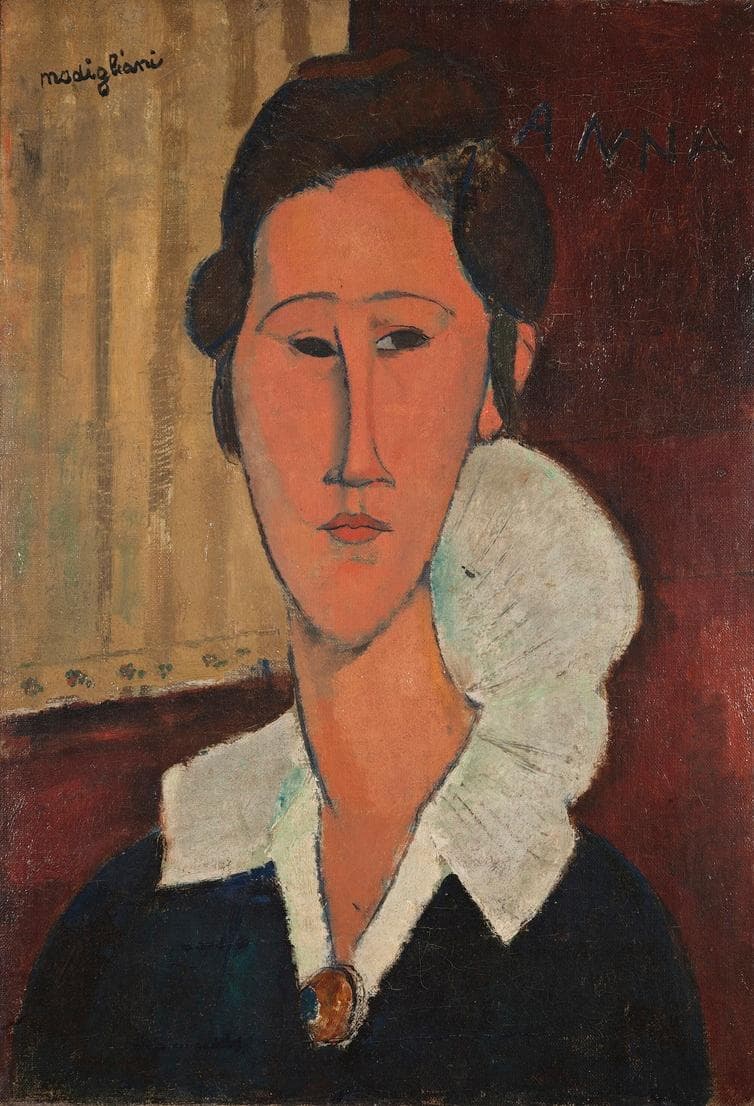
PARMA – Pablo Picasso’s 1906 pastel Nu debout (Standing Nude), in which the female form becoming increasingly simplified, marks a key stage in the artist’s journey towards Les Demoiselles d’Avignon, one of the most revolutionary paintings of the 20th century. Revolution—both visual and concerning identity—is precisely the subject of She: Portraits of Women, from Van Gogh to Modigliani and Beyond, an exhibition bringing over sixty masterpieces from the National Gallery of Modern and Contemporary Art (GNAM) to Parma.
Born from an agreement between the Municipality of Parma and the Roman museum for the "Migrant Museum" initiative—through which collection works travel across Italy and abroad—the exhibition is curated by Renata Cristina Mazzantini and Cesare Biasini to celebrate the 80th anniversary of women's suffrage.
A gallery of real and ideal figures, executed in painting, sculpture, photography, drawing, and even tapestry, narrates the moment when the female figure ceased to be a mere muse to become the driving force of artistic research. This intertwining of art and emancipation is embodied by Picasso's pastel itself—donated in 2025 to the GNAMc by the Cy Twombly Foundation—alongside Van Gogh’s L’Arlésienne: Madame Ginoux, Modigliani’s The Woman with a Collar, Giovanni Boldini’s eccentric Marchesa Luisa Casati, and Palma Bucarelli portrayed by Alberto Savinio.
The journey proceeds through the refined lines of Gustav Klimt’s drawings (such as a study for The Three Ages of Woman), Kees van Dongen’s Woman in White, whose inquiring eyes challenge the bourgeois conventions of the early 20th century just as the female body ceases to be an object of pure contemplation. Amidst the gaunt forms of Alberto Giacometti’s Figure (Femme de Venise VI) and Man Ray’s visual riddles, the image of women becomes an enigma of self-determination. Even within the interwar art section, portraits by Giorgio De Chirico, Carlo Carrà, Mario Sironi, and Adolfo Wildt reject gender stereotypes.
Dismantling old paradigms further are female artists themselves, including Antonietta Raphael, Dora Maar, and Francesca Woodman, right up to the contemporary languages of Vanessa Beecroft and Marinella Senatore. (Elisabetta Berti)
Lei. Ritratti di donne, da Van Gogh a Modigliani e oltre (She: Portraits of Women, from Van Gogh to Modigliani and Beyond)
Where: Parma — Palazzo del Governatore, Piazza Giuseppe Garibaldi 19/L
When: Until March 8, 2027
Tickets & Hours: Full €12; reduced €8. Wed, Thu, Sat, Sun 10 AM–7 PM; Friday 10 AM–10 PM; closed Monday and Tuesday.
Info: Tel. +39 0521-218035 | www.cultura.comune.parma.it | Catalogue by Silvana Editoriale
The legend of Barcelona conquers Bologna
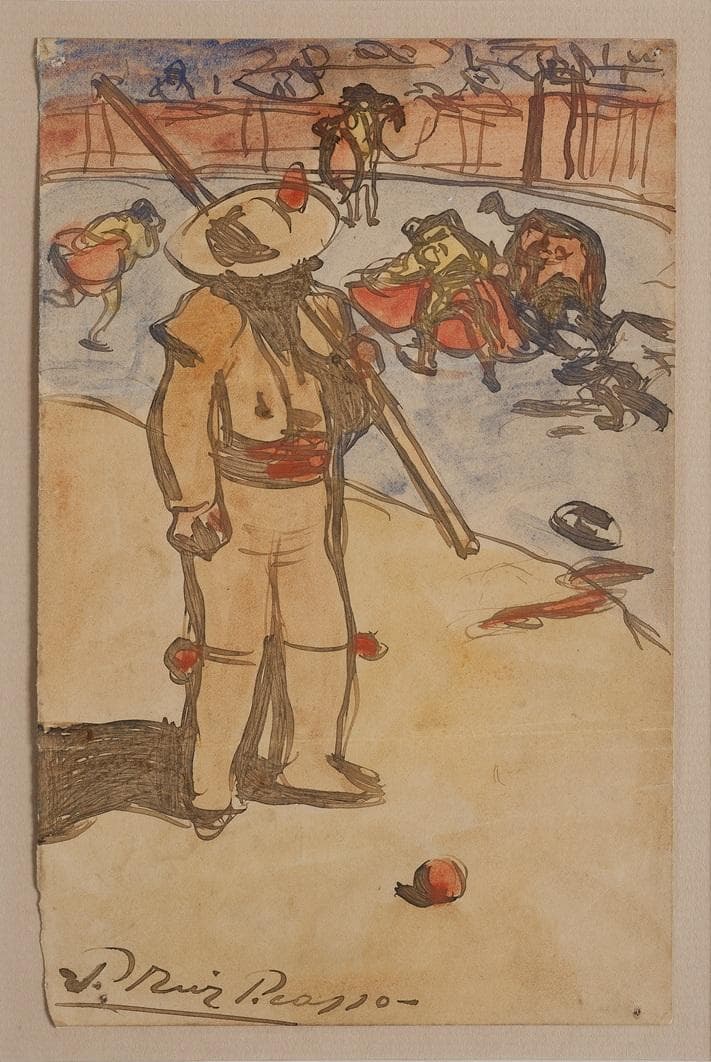
BOLOGNA – Gothic and exotic Barcelona. At the dawn of the 20th century, the city of opposites glittered in a delicate balance between tradition and modernity, port and barrio, sardana and barricades. Beautiful and tragic, the "Rose of Fire"—La Rosa de Foc, as the anarchists dubbed it—bewitched artists with its charm divided between sleepless nights and the lazy rhythms of the platja. At the Els Quatre Gats café, young masters gathered while coming and going from Paris, debating amidst wrought-iron tables about the latest artistic novelties circulating across Europe's capitals. A not-yet-eighteen-year-old Pablo Picasso exhibited his very first sombre works here before setting off for the Ville Lumière. More mature colleagues Ramon Casas and Santiago Rusiñol agonized every night (over drinks) over the destiny of painting. As ringleaders of Catalan Modernism, they had shared a room in Montmartre right above the legendary Moulin de la Galette, headquarters of the Impressionists, immortalized in the atmospheric, dappled canvases of Renoir and Toulouse-Lautrec. The exhibition From Gaudí to Picasso: Masterpieces from the Carmen Thyssen Collection, held at Bologna's Palazzo Albergati, weaves these intersecting stories into a vast fresco of artistic connections set against the backdrop of the Ciudad Condal and its Ramblas. Perhaps for the first time, the familiar narrative centred on Paris—the electric magnet of the avant-gardes—yields precedence to a different narrative. Mediterranean, warm, and romantic, Barcelona's setting welcomes and swallows up within the exhibition those who inhabited it and shaped it through the forms of nature or dreams: giants like Antoni Gaudí with his overflowing architectures, or Joan Miró, who transformed the ancient corroded pulleys of the Maritime Museum into primitive characters, anthropomorphic totems for ancestral rituals. A story within a story: all the exhibited works hail from the prestigious collection of Baroness Carmen Thyssen, renowned for the family masterpieces already housed and displayed in Madrid. In a couple of years, the collector and patron will inaugurate a brand-new museum in Barcelona itself, dedicated entirely to the city and the masters who left their hearts there. (Chiara Gatti)
Da Gaudì a Picasso. Capolavori dalla Collezione Carmen Thyssen (From Gaudí to Picasso: Masterpieces from the Carmen Thyssen Collection)
Where: Bologna — Palazzo Albergati, Via Saragozza 28
When: Until March 29, 2027
Tickets & Hours: Full €16; reduced €14. Every day 10 AM–8 PM.
Info: Tel. +39 051-03014 | www.palazzoalbergati.com | Catalogue by Moebius
Artemisia's redemption between the Medici and Galileo
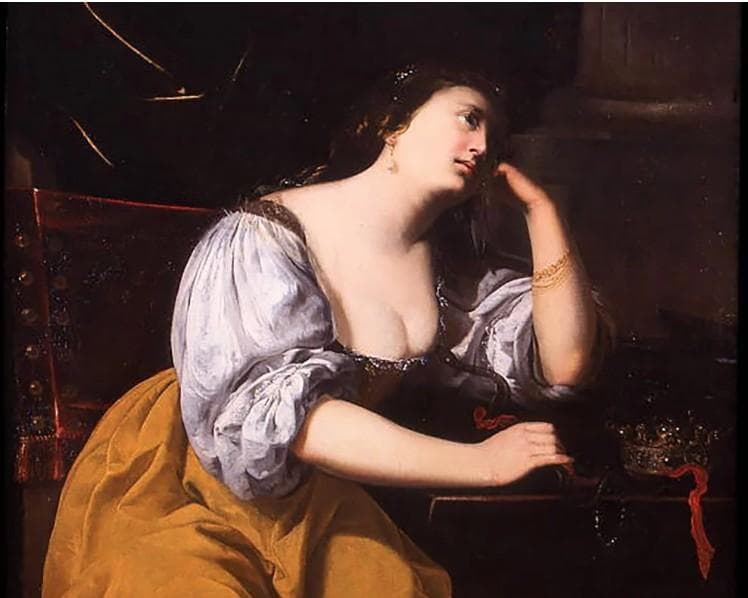
FLORENCE – When a twenty-year-old Artemisia Gentileschi arrived in Florence between 1612 and 1613, her name carried the baggage of morbid attention generated by her celebrated Roman rape trial against Agostino Tassi. The Medici city offered her much more than a refuge; it became the stage for her artistic development and professional recognition.
The Museo degli Innocenti dedicates a major exhibition, curated by Costantino D’Orazio, Cristina Acidini, and Sandro Bellesi, to this Florentine period of the painter's life, which lasted until 1620. The showcase investigates the years when Artemisia entered the court of Grand Duke Cosimo II de' Medici and forged bonds with intellectuals of the calibre of Michelangelo Buonarroti the Younger, who acted as her mentor and commissioned her famous Allegory of Inclination, which we can still admire today at Casa Buonarroti. It also brings to light her epistolary relationship with Galileo Galilei, which proved decisive in helping her secure payment for her dramatic Judith Beheading Holofernes, one of her best-known paintings housed in the Uffizi, whose violent intensity sparked strong reactions.
The culminating moment of this redemption came on 19 July 1616, with her admission to the Academy of the Arts of Drawing (Accademia delle arti del disegno): she was the first woman ever to pass through its doors.
The exhibition, produced by Arthemisia in collaboration with the Museo degli Innocenti and under the patronage of the Municipality of Florence, places her paintings side by side with two masterpieces by Caravaggio and canvases by the great Florentine masters of the 17th century: Cristofano Allori, Francesco Furini, Giovanni Martinelli, Filippo Tarchiani, Fabrizio Vannini, Lorenzo Lippi, and Il Volterrano, celebrating the turning point that cemented her among the giants of art. (Elisabetta Berti)
Artemisia Gentileschi a Firenze (Artemisia Gentileschi in Florence)
Where: Florence — Museo degli Innocenti, Piazza della SS. Annunziata 13
When: Until April 4, 2027
Tickets & Hours: Full €16; reduced €14. Every day 9 AM–6 PM.
Info: Tel. +39 055-2037122 | www.museodeglinnocenti.it | Catalogue by Moebius
Portrait of the ladies who painted the 18th century
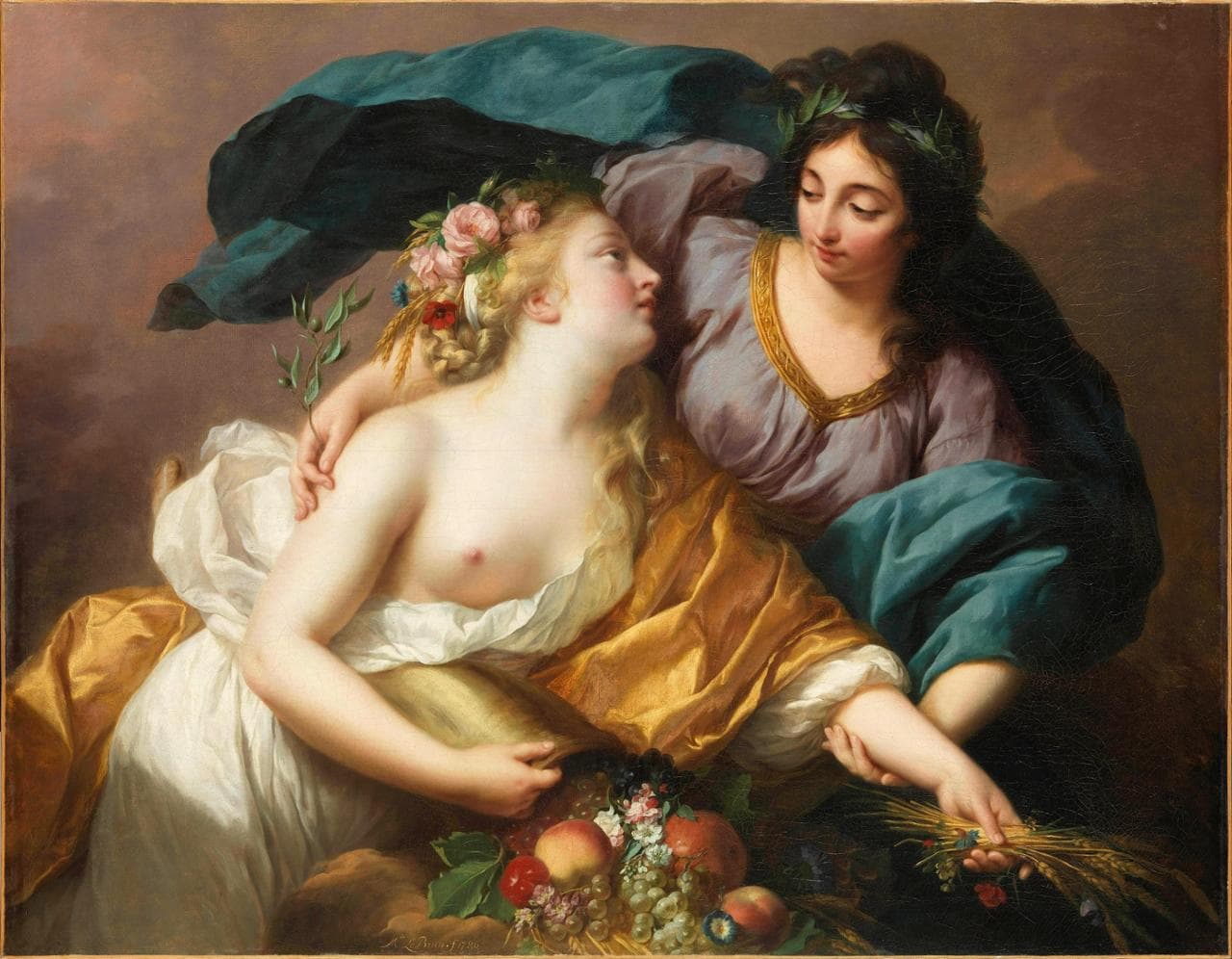
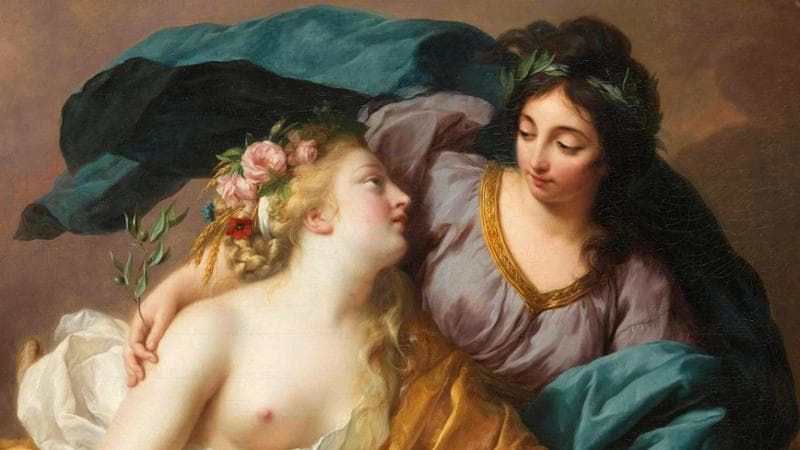
NAPLES – At the end of the 18th century, when being a woman and a painter was already an exception, Angelica Kauffmann and Élisabeth Louise Vigée Le Brun achieved something even more complicated: becoming international celebrities, working for the courts of Europe, entering academies, and managing their own public image. Gallerie d’Italia in Naples dedicates Angelica and Élisabeth: The Age of Women Painters to them from November 6 to March 7, 2027.
Curated by Francesco Leone, Fernando Mazzocca, and Elisabetta Rasy, the exhibition brings together the lives and works of the two artists for the first time. Seventy-three works—including paintings, drawings, prints, and sculptures on loan from the Uffizi, the Louvre, the National Portrait Gallery, the Capitoline Museums, and Capodimonte—narrate two parallel yet distinct careers.
Kauffmann, born in Chur in 1741, worked across portraiture, allegory, religious painting, and above all history painting, which occupied the highest position in the academic hierarchy. Vigée Le Brun, born in Paris fourteen years later, made portraiture her specialized territory, becoming the preferred portraitist of Marie Antoinette before the Revolution forced her to flee France. Naples serves as the point where their two trajectories intersect once again.
Both worked for the Bourbon court, and the exhibition juxtaposes Kauffmann’s model for the portrait of Ferdinand IV and his family with portraits of Bourbon princesses painted by Vigée Le Brun. Yet the most revealing comparison emerges from their respective Uffizi self-portraits, dated 1787 and 1789: two women gazing at the viewer, knowing precisely who they want to be before our eyes. (Paolo Casicci)
Angelica e Elisabeth. L'età delle donne pittrici (Angelica and Élisabeth: The Age of Women Painters)
Where: Naples — Gallerie d’Italia, Via Toledo 177
When: From November 6 to March 7, 2027
Tickets & Hours: Full €8; reduced €4. Tue–Fri 10 AM–7 PM; Sat and Sun 10 AM–8 PM; closed Monday.
Info: Tel. 800 167 619 | www.gallerieditalia.com | Catalogue by Allemandi
Liu Bolin, the camouflaged creator in Gibellina
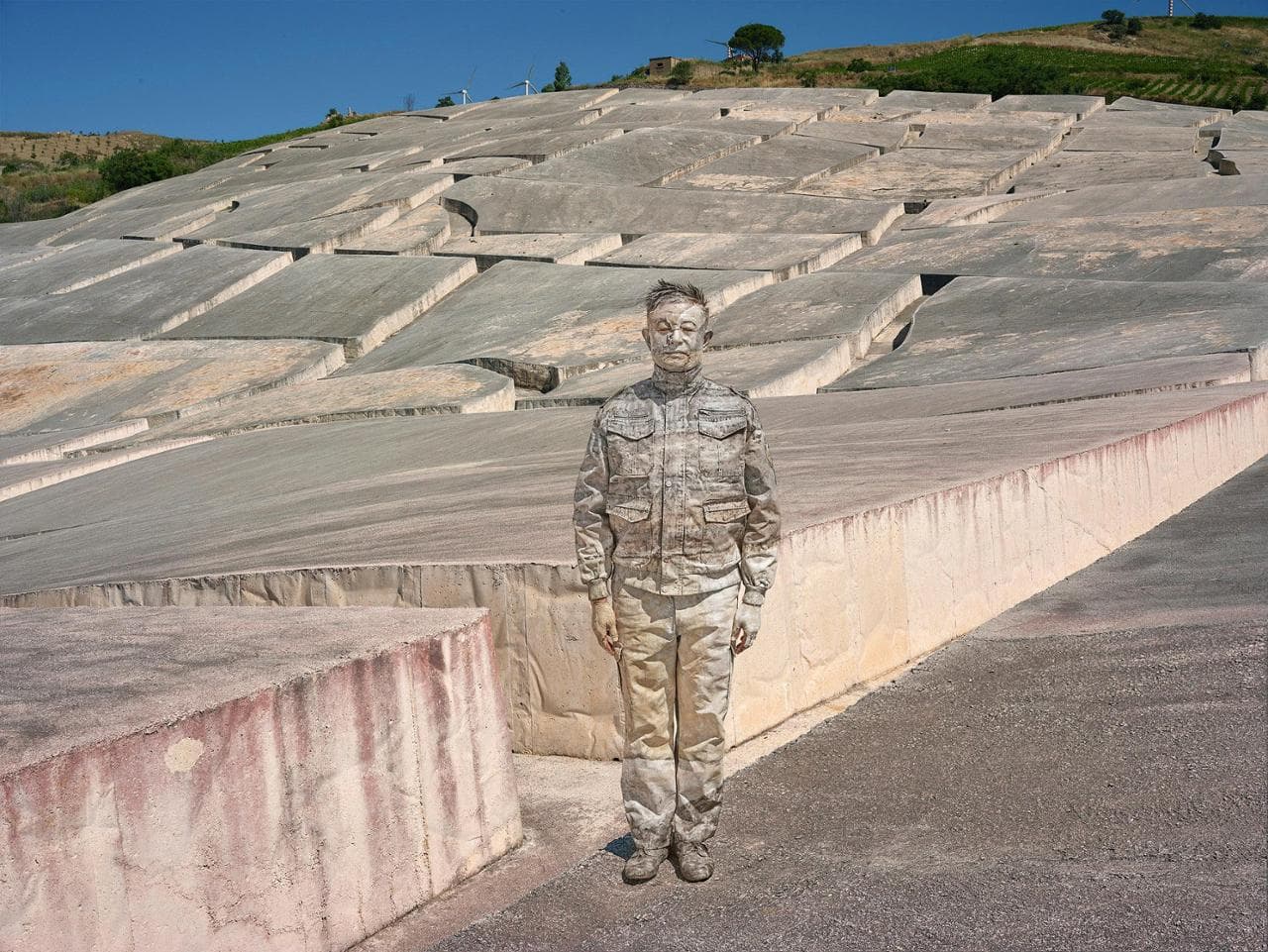
GIBELLINA (TRAPANI) – Chinese artist Liu Bolin has been known as "The Invisible Man" since 2005, when he was just past thirty years old. At the time, the Beijing administration ordered the demolition of Suojia Village, a district housing the studio homes of many artists who had frequently opposed the government; he decided to paint himself the exact colour of the rubble left of his studio and photographed himself completely blended into the background.
Ever since that first camouflage, Bolin has used his own body—simultaneously absent and present—across the globe to question the relationship between the individual and society, investigating the scars left between memory and identity. Bolin’s exhibition project Macerie (Rubble), presented at the MAC in Gibellina as the highlight of the event-packed Bring Me the Future programme for Gibellina Italian Capital of Contemporary Art 2026 (gibellina2026.it), brings together photographs taken during performances the artist staged in the Sicilian town and across the Belìce Valley last June.
Within Alberto Burri's Grande Cretto in Gibellina Vecchia, the artist camouflaged himself among the resurrected ruins of the earthquake-stricken town. If Burri's artwork sealed the agony of an earthquake in white concrete, Bolin's performance moved through the labyrinth, giving flesh and voice to what was lost. Similarly, by camouflaging himself against the Temple of Hera in Selinunte, custodian of a millennia-old memory made of layers, collapses, and enduring traces, Bolin merges himself with the ancient stone to explore the relationship between the individual and history, between presence and time.
Bolin's practice of subtraction—which subjects him to hours of body painting—is not mere visual illusionism, but a tool with which to observe more deeply the world we inhabit. (Angelo Molica Franco)
Liu Bolin. Macerie (Liu Bolin: Rubble)
Where: Gibellina (Trapani) — MAC Museo d’Arte Contemporanea, Viale Segesta 1
When: Until December 10
Tickets & Hours: Full €7; reduced €4. Tuesday to Sunday 10 AM–1:30 PM, 3 PM–6:30 PM; closed Monday.
Info: Tel. +39 0924-524882 | https://gibellina2026.it
This article was reviewed by an external translation partner